21st Oct 2026
Yamaha 1.8L Engine Problems: Common Issues to Watch For
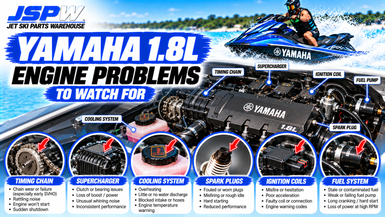
1. Timing Chain Problems
One of the most important issues to investigate is timing chain wear or failure, particularly on certain early 1.8L SVHO engines.
Owner reports and specialist discussions have highlighted timing chain failures in some 2014–2015 SVHO engines. The timing chain drives the camshafts, keeping the valves operating in time with the crankshaft. If the chain breaks or loses correct timing, the engine can stop suddenly and suffer significant internal damage. Reports also describe an updated chain and tensioner design for later engines. (JetDrift; GreenHulk)
Warning signs
-
Unusual rattling or metallic noise from the engine.
-
An engine that cranks but will not start.
-
Sudden engine shutdown while riding.
-
Camshaft timing or related diagnostic faults.
Timing chain failure is not inevitable, and the reports do not establish that every engine from these years is affected. However, if you're buying a 2014–2015 SVHO, ask whether the timing chain assembly has been inspected or updated.
A qualified mechanic can inspect the chain, guides, tensioner and timing components according to the service manual. Do not rely on engine hours alone to determine whether the chain is safe.
2. Supercharger Problems
The supercharged versions of the Yamaha 1.8L engine have additional components that need attention. The supercharger increases intake pressure to produce more power, but its bearings, drive components and clutch assembly can wear or fail.
Some earlier SHO engines were reported to have supercharger clutch problems. Specialist reviews describe improvements to the supercharger design in later models, including the SVHO generation. (JetDrift)
Symptoms to watch for
-
Loss of power or boost.
-
Unusual whining, rattling or grinding noises.
-
Engine performance that feels inconsistent.
-
Metallic debris or abnormal wear found during inspection.
Not every loss of power is caused by the supercharger. Fuel delivery, ignition, intake restrictions and jet-pump problems can produce similar symptoms.
If the supercharger is noisy or boost performance has changed, have the assembly checked before continuing to ride hard.
Maintenance tip: Confirm the supercharger inspection and servicing requirements for the specific model and year. Do not assume all Yamaha 1.8L engines share the same supercharger design or service interval.
3. Overheating and Cooling-System Problems
The Yamaha 1.8L uses a raw-water cooling system, with water supplied through the jet-pump system and routed through designated cooling passages.
If water flow is restricted, engine temperatures can rise quickly. A blocked intake, obstructed cooling passage, damaged hose or other cooling-system fault can cause overheating.
Yamaha's owner's manuals warn operators to reduce engine speed and return to shore when an overheat warning occurs. If cooling water is not discharging from the pilot outlet, the manual instructs the operator to stop the engine and check for an obstructed intake. Continued operation can cause severe engine damage. (Yamaha FX SVHO owner's manual)
Warning signs
-
An overheat warning or alarm.
-
Reduced engine RPM due to protective engine controls.
-
Little or no water discharge from the cooling-water pilot outlet.
-
Steam, unusual smells or signs of excessive heat.
-
Reduced performance after a cooling-system restriction.
What to check
Inspect the jet intake for obstructions and check accessible cooling hoses for damage or leaks. Follow the correct flushing procedure and investigate any recurring overheat warning.
Never continue riding at high speed with an overheating engine. If the cause cannot be identified and corrected, have a Yamaha dealer or qualified marine mechanic diagnose the problem.
4. Oil Pressure and Lubrication Problems
The 1.8L engine relies on proper lubrication to protect its crankshaft, bearings, camshafts and other moving components.
Low oil level, incorrect oil, oil contamination, a restricted oil supply or an internal lubrication fault can reduce protection and lead to expensive damage.
Symptoms to watch for
-
An oil-pressure warning.
-
Unusual mechanical knocking or ticking.
-
Oil leaks around the engine.
-
Oil level that repeatedly drops.
-
Abnormal oil condition or contamination.
An oil-pressure warning should never be ignored. Yamaha's owner's manual instructs operators to reduce engine speed, return to shore and check the oil level. If the level is sufficient, the watercraft should be checked by a Yamaha dealer. (Yamaha FX SVHO owner's manual)
Check the oil using the exact procedure specified for the model. Oil-level readings can be affected by the checking procedure, so do not add oil based on an unreliable measurement.
If the warning remains on, shut the engine down as directed and investigate the cause before restarting.
5. Spark Plug and Ignition Problems
A misfiring engine does not automatically mean the 1.8L has a major internal problem. Spark plugs, ignition coils, electrical connections and fuel delivery should be checked before assuming the engine needs rebuilding.
Common symptoms
-
Difficult starting.
-
Rough idle.
-
Hesitation during acceleration.
-
Misfiring under load.
-
Reduced top speed or uneven power delivery.
Spark plugs can become fouled, worn or damaged. Incorrect plug specification or gap can also cause performance issues.
Start with a visual inspection of the plugs and check their condition against the service manual. If one cylinder appears different from the others, further diagnosis may be needed to determine whether the problem is ignition, fuel delivery or mechanical.
Do not replace parts at random. Diagnostic fault codes, plug condition and appropriate testing can help narrow down the cause.
6. Fuel-System Problems
Fuel contamination and restricted fuel delivery can cause poor starting, hesitation and loss of power.
A WaveRunner that has been stored for a long period may have stale fuel or contamination in the fuel system. Restricted filters, a failing fuel pump or electrical problems can also affect engine performance.
Symptoms to watch for
-
Long cranking before the engine starts.
-
Hesitation under acceleration.
-
Power loss at higher RPM.
-
Stalling or inconsistent running.
-
Poor performance that develops after storage.
Yamaha's troubleshooting information lists stale or contaminated fuel among the possible causes of poor performance, along with spark plug, electrical and intake-related faults. (Yamaha FX SVHO owner's manual)
Check fuel quality and the service history before replacing expensive components. Fuel-pressure testing and electrical diagnosis may be necessary if the problem persists.
7. Intake and Intercooler Problems on Supercharged Models
Supercharged 1.8L engines use additional intake and charge-air cooling components. Depending on the exact model, a restriction, leak or fault in this system can affect performance.
Potential issues include damaged intake hoses, loose clamps, restricted airflow and intercooler-related problems.
Symptoms to watch for
-
Reduced boost or power.
-
Hesitation under heavy acceleration.
-
Unusual intake noises.
-
Loose or damaged hoses.
-
Repeated performance issues after the engine gets hot.
Inspect accessible hoses and clamps for damage and check for signs of water intrusion or corrosion where applicable. Intercooler design and service procedures differ between models, so use the correct service information before dismantling the system.
8. Corrosion and Poor Maintenance
Saltwater use does not automatically cause engine failure, but inadequate flushing, poor storage and neglected maintenance can increase the risk of corrosion and cooling-system restrictions.
Pay particular attention to the cooling-water hoses, electrical connections, exhaust components and other areas exposed to moisture.
Prevention
-
Flush the craft as specified after saltwater use.
-
Inspect cooling hoses and clamps.
-
Keep electrical connections in good condition.
-
Follow the correct engine oil and filter service intervals.
-
Investigate warning lights, leaks and unusual noises promptly.
-
Store the watercraft according to Yamaha's recommendations.
Regular maintenance is especially important on a used machine where the previous owner's service history is incomplete.
Naturally Aspirated HO vs Supercharged SHO/SVHO
The naturally aspirated and supercharged engines share the basic 1.8L platform, but their additional components and operating demands differ.
| Area | Naturally aspirated HO | Supercharged SHO/SVHO |
|---|---|---|
| Supercharger | Not fitted | Requires model-specific inspection and servicing |
| Timing chain | Inspect condition and service history | Pay particular attention to early SVHO history |
| Intake system | Conventional intake arrangement | Additional boost and charge-air components |
| Heat and load | Lower specific output than high-performance supercharged versions | Higher performance demands and additional components |
| Used-purchase checks | Compression, oil condition, cooling, starting and service history | All HO checks, plus supercharger, boost system and relevant timing-chain history |
Neither version should be judged by model year alone. Condition, maintenance, operating history and any documented repairs matter.
What to Check Before Buying a Used Yamaha 1.8L WaveRunner
If you're considering a used FX, FZR, FZS or another model with the 1.8L engine, use this checklist.
-
Confirm the exact model, year and engine version.
-
Ask for maintenance invoices and engine repair history.
-
Check for evidence of timing-chain work on relevant early SVHO models.
-
Inspect the oil level and condition using the correct procedure.
-
Check for warning lights, stored fault codes and signs of overheating.
-
Listen for unusual engine or supercharger noises.
-
Inspect cooling hoses, electrical connections and accessible intake components.
-
Check compression and perform additional mechanical tests if indicated.
-
Have the craft inspected by a qualified marine mechanic before purchase.
-
Conduct a proper water test where safe and appropriate.
A clean exterior and low hour reading do not guarantee that an engine is mechanically sound. A documented service history and an independent inspection are much more useful.
Final Thoughts
The Yamaha 1.8L is a capable engine platform, but buyers and owners should pay attention to timing-chain history on certain early SVHO engines, supercharger condition, cooling-system performance, lubrication, ignition and fuel delivery.
The most important step is to diagnose symptoms rather than assume every problem is a known engine defect. A loss of power might be caused by the engine, the intake system or the jet pump, and the repair can be very different in each case.
If you are servicing or repairing a Yamaha 1.8L, always confirm replacement-part fitment against the exact model, year and engine configuration.
Jet Ski Parts Warehouse supplies parts for a range of personal watercraft, helping owners and mechanics source components for maintenance and repairs.