
28th Oct 2026
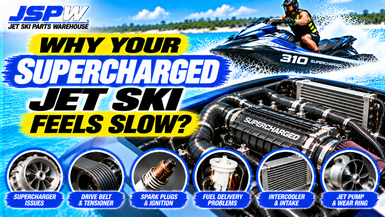
Why Your Supercharged Jet Ski Feels Slow
A supercharged jet ski should deliver strong acceleration, crisp throttle response and plenty of power across the rev range. If yours feels sluggish, takes longer to reach top speed, struggles to accelerate or revs higher than usual without gaining speed, something may not be working as it should.
The cause could be as simple as worn spark plugs or a damaged drive belt, or it could involve the supercharger, fuel system, intercooler or jet pump. The key is to identify the symptoms before replacing parts unnecessarily.
This guide explains the most common reasons a supercharged jet ski feels slow, what to check first and when it is time to investigate further.
1. Supercharger Not Producing Enough Boost
The supercharger forces more air into the engine, allowing it to produce more power than a naturally aspirated engine. If it is not operating correctly, your jet ski may still run but feel noticeably weaker.
Signs to look for:
-
Poor acceleration, particularly when opening the throttle.
-
Reduced top speed compared with its usual performance.
-
A new whining, rattling or grinding noise.
-
A sudden or substantial loss of power.
Possible causes include worn internal components, a slipping supercharger clutch on applicable models, drive-system problems or an air leak. A supercharger fault should be investigated promptly, especially if accompanied by unusual noises.
The exact design differs between manufacturers. Some Kawasaki supercharged models use a belt-driven supercharger, while Sea-Doo systems have different drive and clutch arrangements. Follow the service procedure for your specific model rather than applying one brand's checks to another.
2. Worn or Damaged Supercharger Drive Belt
On belt-driven supercharged engines, the drive belt transfers power to the supercharger. A worn, damaged or incorrectly tensioned belt can affect its operation and reduce engine performance.
Inspect for:
-
Cracks, fraying or missing belt ribs.
-
Excessive wear or glazing.
-
Damaged pulleys or alignment issues.
-
Signs of belt slippage or abnormal belt noise.
A belt may look acceptable externally yet still require closer inspection. Use the manufacturer's specifications when checking belt condition and tension, and replace it with the correct part if necessary.
Note: This check applies to belt-driven systems, including applicable Kawasaki Ultra models. It is not a universal diagnosis for every supercharged jet ski.
3. Fouled Spark Plugs or Weak Ignition Coils
A supercharged engine places high demands on its ignition system. Worn spark plugs, incorrect plug specifications or failing ignition coils can cause misfires under load.
Your jet ski might idle reasonably well but stumble or lose power when accelerating hard.
Common symptoms include:
-
Hesitation when applying the throttle.
-
Rough running under load.
-
Engine misfires at higher RPM.
-
Increased fuel consumption.
-
An engine warning light or fault code.
Remove and inspect the spark plugs if you have the necessary skills and the engine is cool. Check their condition, gap and part number against the service manual. If the plugs are correct, further testing may be needed to identify a weak coil or another ignition fault.
Replacing spark plugs without checking the underlying cause can waste money, particularly if the actual problem is fuel delivery or a boost leak.
4. Blocked or Inefficient Intercooler
The intercooler reduces the temperature of the compressed intake air. Cooler air helps the engine produce power efficiently, particularly when the supercharger is working hard.
If the intercooler becomes restricted, loses cooling efficiency or develops an internal or external leak, performance may suffer.
Potential warning signs include:
-
Power dropping during extended hard riding.
-
Performance that deteriorates as the engine gets hotter.
-
Boost or intake-air leaks.
-
Unusual exhaust smoke on some models, depending on the fault.
A gradual loss of power can sometimes point towards an intercooler issue, although it is not proof by itself.
A workshop can inspect the cooling circuit, hoses and connections, and perform the pressure tests specified for that engine. Avoid assuming every intercooler problem is caused by blockage; leaks and internal damage can produce similar symptoms.
5. Fuel Pump or Fuel Delivery Problems
A supercharged engine needs adequate fuel delivery when operating under high load. If the fuel pump cannot maintain the required pressure or volume, the engine may struggle to produce full power.
Possible causes include:
-
A weak fuel pump.
-
A restricted fuel filter or pickup.
-
Contaminated or stale fuel.
-
Faulty injectors.
-
An electrical supply problem affecting the pump.
Symptoms can include hesitation, surging, difficult starting and power loss during acceleration.
Fuel delivery problems can resemble supercharger faults, so it is important to test fuel pressure and follow the manufacturer's diagnostic process rather than replacing the pump based on symptoms alone.
Important: If the engine is misfiring badly or you suspect a lean-running condition, avoid continued hard riding until the cause is identified. Incorrect fuelling under boost can cause serious engine damage.
6. Damaged Impeller or Worn Jet Pump Wear Ring
Not every slow jet ski has an engine problem. The jet pump converts engine power into thrust, so damage or excessive clearance in the pump can prevent the craft from accelerating properly.
One of the most useful clues is the relationship between engine RPM and watercraft speed.
This may indicate cavitation caused by a damaged impeller, excessive wear-ring clearance, an intake obstruction or another pump-sealing issue.
Poor acceleration with vibration or unusual pump noise
Inspect the intake grate and impeller for debris or damage. The jet pump and drive components may need further examination.
Sea-Doo and Yamaha troubleshooting guidance lists intake blockages, impeller damage and wear-ring problems among possible causes of poor acceleration or power.
Never reach into the intake or near the impeller while the engine could start. Remove the safety lanyard and follow the manufacturer's safety instructions before inspecting the pump.
7. Boost Hoses, Intake Leaks or Loose Connections
The intake system must seal properly to deliver the compressed air the engine needs. A split hose, loose clamp, damaged seal or leaking intercooler connection can reduce the pressure reaching the engine.
Look for:
-
Loose or displaced hose clamps.
-
Cracked, split or softened hoses.
-
Damaged intake connections or seals.
-
Oil residue or marks around a connection that may warrant closer inspection.
-
New hissing sounds under load.
Some leaks are difficult to see with the engine installed in the craft. A workshop may need to carry out a controlled pressure or leak test.
Do not loosen pressurised components or run the engine with intake parts removed. Use the correct service procedure for the make and model.
8. Engine Protection Mode or Overheating
Modern jet skis can reduce engine output when the engine management system detects certain faults or unsafe operating conditions.
Possible triggers include overheating, low oil pressure, electrical faults or other engine-management warnings, depending on the model.
If the jet ski suddenly becomes slow and displays a warning, check the display and retrieve fault codes before clearing anything. Inspect the intake grate for obvious debris only when it is safe to do so, and follow the manual's instructions for any overheating warning.
Do not continue riding a craft with an active oil-pressure warning, severe overheating symptoms or a serious engine fault. Stop and investigate the cause.
How to Diagnose a Slow Supercharged Jet Ski
Use this checklist to narrow down the likely cause before ordering replacement parts.
Troubleshooting checklist
0 of 6
Record the symptoms
Note whether the loss of power was sudden or gradual, and whether engine RPM rises normally.
Check the display
Record warning lights and fault codes before clearing them.
Inspect the intake
With the engine safely disabled, check for visible debris or damage at the intake grate.
Review service history
Check when spark plugs, supercharger components and other scheduled maintenance were last inspected.
Inspect visible hoses and belts
Look for damage or loose connections where accessible, following the model-specific procedure.
Test before replacing parts
Have the supercharger, fuel pressure, ignition and jet pump checked according to the symptoms.
When Should You Stop Riding?
Stop the engine and arrange an inspection if you notice:
-
A sudden, major loss of power.
-
New metallic rattling, grinding or severe supercharger noise.
-
An oil-pressure or serious overheating warning.
-
Severe misfiring or repeated engine cut-outs.
-
Evidence of water entering the engine or a major mechanical failure.
Continuing to run a damaged supercharger or engine under heavy load can turn a repairable fault into a much more expensive rebuild.
Does Your Jet Ski Make and Model Matter?
Absolutely. A supercharged Kawasaki Ultra, Sea-Doo RXP-X or RXT-X, and Yamaha FX SVHO may all feel slow for different reasons because their supercharger designs, intake systems, engine management and maintenance requirements differ.
Before ordering parts, confirm the exact model, model year and engine version. Use the relevant service manual for maintenance intervals, testing procedures and specifications. For example, Kawasaki's Ultra 310 owner's manual specifically identifies the supercharger and intercooler as important performance components and provides model-specific maintenance instructions.
Final Thoughts
If your supercharged jet ski feels slow, do not automatically assume the supercharger has failed. Spark plugs, fuel delivery, intake leaks, intercooler problems and jet pump wear can all produce similar symptoms.
Start with the warning signs, service history and basic safe inspections. Then test the suspected system before replacing expensive components.
At Jet Ski Parts Warehouse, you can look for replacement jet ski parts for your repair. Confirm fitment by make, model and year before purchasing, particularly for supercharger and engine components.