
30th Sep 2026
Why Your Jet Ski Is Vibrating At Speed
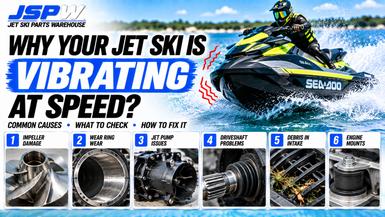
A jet ski should feel relatively smooth and predictable when accelerating and cruising. If your ski develops a noticeable vibration at higher speeds or RPM, something in the propulsion system, drivetrain, engine mounting or jet pump may need attention.
A small vibration can sometimes be caused by debris or a minor impeller issue, but a strong or worsening vibration shouldn't be ignored. Sea-Doo service information specifically identifies damaged or unbalanced impellers, worn jet-pump components and excessive driveshaft deflection as potential sources of vibration. (ManualsLib)
Here's what to check.
1. Damaged or Bent Impeller
One of the first things to inspect is the jet pump impeller.
The impeller spins at very high speed, so even relatively small damage to one blade can create an imbalance.
Common causes include:
-
Hitting sand or shallow water
-
Striking rocks or debris
-
Ingesting sticks or other objects
-
Chipped or bent blades
-
Excessive wear
-
Corrosion or pitting
-
Incorrect previous repairs
Sea-Doo service manuals instruct technicians to inspect impellers for distortion, blunt or damaged blade tips and other damage because an unbalanced impeller can produce vibration and damage surrounding components. (ManualsLib)
Signs the impeller may be the problem
You may notice:
-
Vibration increases with RPM
-
Vibration is strongest under acceleration
-
Reduced top speed
-
Poor acceleration
-
Cavitation
-
A different sound from the jet pump
-
Vibration coming predominantly from the rear of the ski
Remove the intake grate or inspect the impeller area where safely possible and look for damaged or uneven blades.
2. Worn or Damaged Wear Ring
The wear ring surrounds the impeller and provides the close clearance required for the jet pump to operate efficiently.
If the ring becomes badly worn, scratched or damaged, the clearance between the impeller and ring increases.
Sea-Doo service information calls for inspection of the wear ring for deep scratches, irregular surfaces and apparent damage. Some models also specify a maximum impeller-to-wear-ring clearance that must be measured rather than simply judged visually. (ManualsLib)
A damaged wear ring can contribute to:
-
Vibration
-
Cavitation
-
Poor acceleration
-
Reduced top speed
-
High engine RPM without corresponding speed
If the ski has recently sucked up sand or debris, inspect the impeller and wear ring together.
3. Debris Around the Jet Pump
A surprisingly simple cause is something stuck in the intake or wrapped around the impeller.
Check for:
-
Weed
-
Rope
-
Fishing line
-
Plastic
-
Seaweed
-
Sticks
-
Other debris
Sea-Doo troubleshooting information lists weeds or debris around the impeller and a clogged jet-pump water intake among causes of abnormal propulsion-system behaviour. (ManualsLib)
Always shut the engine off and remove the lanyard before inspecting the pump.
Never put your hands near the impeller while the engine could start.
4. Jet Pump Bearing Problems
The jet pump contains bearings supporting the impeller shaft.
A worn bearing can allow excessive shaft movement and create vibration, noise and abnormal impeller movement.
During a proper jet-pump inspection, bearings and the impeller shaft should be checked for:
-
Radial play
-
Scoring
-
Pitting
-
Corrosion
-
Roughness
-
Abnormal wear
Sea-Doo service manuals specifically provide procedures for checking the impeller shaft and bearings. (ManualsLib)
If you can physically feel excessive movement at the impeller shaft, the pump needs closer inspection.
5. Bent or Damaged Driveshaft
The driveshaft transfers power from the engine to the jet pump.
If it becomes bent or damaged, vibration can become increasingly noticeable as RPM rises.
Possible causes include:
-
Impact damage
-
Incorrect installation
-
Worn components
-
Excessive bearing movement
-
Damaged splines
-
Previous drivetrain problems
Sea-Doo service documentation warns that excessive driveshaft deflection can cause vibration and damage to related components. (ManualsLib)
A driveshaft problem generally requires more investigation than simply looking through the intake grate.
6. Worn Driveshaft Bearings or Support Components
Some jet ski drivetrains use bearings and support components that keep the shaft correctly aligned.
If these components become worn, the shaft may not run concentrically.
This can produce a vibration that:
-
Gets worse with RPM
-
May be present even when the pump looks visually OK
-
Can be accompanied by unusual mechanical noise
-
May cause further wear to seals and splines
A service manual should be used for the exact inspection procedure and allowable play for your particular model.
7. Engine Mounts
Not every vibration comes from the jet pump.
The engine itself is mounted inside the hull using engine mounts.
A damaged, loose or deteriorated mount can allow excessive engine movement and transfer vibration directly into the hull.
Inspect for:
-
Cracked rubber
-
Collapsed mounts
-
Loose mounting hardware
-
Excessive engine movement
-
Signs of contact between components
This is particularly worth checking if the vibration occurs at a particular RPM rather than only at maximum speed.
8. Loose Jet Pump or Mounting Hardware
A loose component can create vibration that feels much more serious than it actually is.
Check the relevant fasteners around:
-
Jet pump
-
Pump support
-
Intake grate
-
Ride plate
-
Engine mounts
-
Driveline components
Don't simply tighten everything as hard as possible. Use the manufacturer's torque specifications for your exact model.
Modern Sea-Doo service documentation, for example, specifies particular installation procedures and torque values for jet-pump components. (ManualsLib)
9. Impeller Shaft or Coupler Problems
The connection between the engine/driveshaft and jet pump needs to remain correctly aligned.
Depending on the model, there may be couplers, dampers, splines and other drivetrain components that can wear.
A damaged coupler can produce:
-
Shuddering under load
-
Vibration during acceleration
-
Clunking or abnormal noise
-
Excessive drivetrain movement
If the impeller and wear ring look good but the vibration remains, the drivetrain should be investigated.
When Does The Vibration Happen?
One of the easiest ways to narrow down the problem is to note exactly when the vibration occurs.
| Symptom | Things to Check |
|---|---|
| Vibration only at high RPM | Impeller, pump, driveshaft |
| Vibration during acceleration | Impeller, coupler, engine mounts |
| Vibration immediately after hitting debris | Impeller, wear ring, pump |
| Vibration with cavitation | Impeller, wear ring, intake |
| Vibration with grinding noise | Bearings, pump, driveshaft |
| Vibration across most RPM ranges | Engine mounts, driveshaft, bearings |
| Vibration accompanied by loss of speed | Impeller, wear ring, pump |
| New vibration after maintenance | Installation, alignment, loose hardware |
The exact symptom pattern isn't enough to diagnose the component by itself, but it helps determine where to start.
How To Diagnose Jet Ski Vibration
Step 1 – Stop riding if the vibration is severe
Don't continue running the ski at high speed simply to see whether the vibration gets worse.
A damaged rotating component can potentially cause additional damage.
Step 2 – Inspect the intake
Look for:
-
Weed
-
Rope
-
Fishing line
-
Plastic
-
Sand or debris
Step 3 – Inspect the impeller
Look for:
-
Bent blades
-
Chips
-
Cracks
-
Missing material
-
Uneven blade edges
-
Heavy corrosion
Step 4 – Inspect the wear ring
Look for:
-
Deep scratches
-
Grooves
-
Damage
-
Excessive clearance
-
Uneven wear
Step 5 – Check the jet pump
If the basic inspection doesn't identify the problem, the pump may need to be removed for proper inspection of the impeller shaft, bearings and related components.
Step 6 – Inspect the drivetrain
If the pump is OK, move further forward:
Impeller → impeller shaft → driveshaft → coupler → engine mounts
This is generally a much better approach than replacing parts randomly.
Can You Keep Riding With A Vibrating Jet Ski?
It depends on the cause and severity.
A small vibration caused by something obvious and easily removed, such as weed around the intake, may be resolved quickly.
However, a new, strong or progressively worsening vibration should be investigated before continued high-speed riding.
A damaged impeller, bearing or driveshaft can potentially cause additional damage if the underlying problem is ignored.
Sea-Doo, Yamaha & Kawasaki Jet Ski Vibration
The same general diagnostic principles apply across major PWC brands, but the actual components and service procedures differ.
Sea-Doo
Pay particular attention to:
-
Impeller
-
Wear ring
-
Jet pump bearings
-
Driveshaft
-
Coupler
-
Engine mounts
Sea-Doo service manuals contain specific inspection procedures for the propulsion and drive systems. (ManualsLib)
Yamaha WaveRunner
Check:
-
Impeller
-
Pump housing
-
Wear components
-
Driveshaft
-
Bearings
-
Engine mounts
Use the Yamaha service information for the specific model when measuring clearances or removing drivetrain components.
Kawasaki
Inspect:
-
Jet pump
-
Impeller
-
Wear ring
-
Driveshaft
-
Bearings
-
Engine mounts
-
Pump mounting hardware
The important point is that clearances, torque specifications and component designs vary between models, so don't use measurements from another jet ski as a substitute for the correct service specification.
Final Thoughts
If your jet ski suddenly starts vibrating at speed, don't automatically assume the engine is the problem.
Start at the jet pump and propulsion system, particularly the:
-
Impeller
-
Wear ring
-
Jet pump
-
Impeller shaft/bearings
-
Driveshaft
-
Coupler
-
Engine mounts
A damaged impeller or worn wear ring can produce both vibration and performance problems, while a more serious drivetrain issue may require the pump or shaft to be removed and inspected.
For JSPW, this also makes vibration a useful diagnostic symptom to pay attention to when choosing replacement impellers, wear rings, jet pump components, driveshaft components, bearings and engine mounts.
SEO Title
Why Is My Jet Ski Vibrating At Speed? Common Causes & Fixes
Meta Description
Is your jet ski vibrating at speed? Learn the most common causes, including damaged impellers, worn wear rings, jet pump problems, driveshaft issues and engine mounts.