
9th Sep 2026
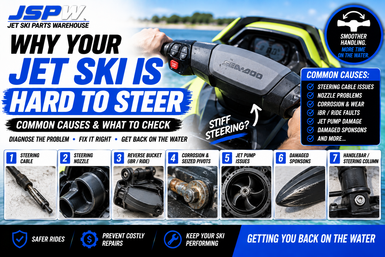
Why Your Jet Ski Is Hard To Steer: Common Causes & What To Check
A jet ski should steer smoothly and predictably. If the handlebars suddenly feel stiff, difficult to turn or don't move through their normal range, something in the steering system needs attention.
Sometimes the cause is as simple as corrosion around a pivot point. Other times, a worn steering cable, damaged nozzle or problem with the jet pump can be responsible.
Whether you ride a Sea-Doo, Yamaha or Kawasaki, here's what can make a jet ski difficult to steer and what you should check before heading back onto the water.
First: How Does A Jet Ski Steering System Work?
Unlike a boat with a rudder, a jet ski steers by changing the direction of the water leaving the jet pump.
When you turn the handlebars, the steering system moves the steering nozzle at the rear of the ski.
Depending on the model, the system may include:
-
Handlebars
-
Steering column
-
Steering cable or linkage
-
Steering nozzle
-
Bushes and pivot points
-
Jet pump components
-
Electronic steering-related systems
If any part becomes seized, damaged or incorrectly adjusted, steering can become stiff or restricted.
1. Seized Or Corroded Steering Cable
A stiff steering cable is one of the first things to investigate.
The cable runs between the steering mechanism and the nozzle at the rear of the ski.
Over time, moisture and salt can contribute to internal corrosion.
Symptoms may include:
-
Heavy handlebars
-
Steering becomes progressively harder
-
Steering doesn't return smoothly
-
Limited steering movement
-
Cable feels rough or notchy
If the cable is badly seized internally, replacement is generally the correct repair.
2. Corroded Steering Nozzle Pivots
The steering nozzle constantly operates around water, making its pivot points vulnerable to corrosion and contamination.
Inspect the nozzle and linkage for:
-
Salt deposits
-
Corrosion
-
Sand
-
Debris
-
Damaged bushes
-
Seized pivots
With the engine off, the nozzle should move smoothly through its intended range when the steering is operated.
3. Damaged Steering Cable
A cable doesn't need to be completely seized to cause problems.
It may also be:
-
Kinked
-
Bent
-
Frayed internally
-
Damaged at the outer casing
-
Corroded around the ends
If steering suddenly became difficult after an impact or repair, inspect the entire cable routing.
4. Steering Cable Adjustment
Incorrect cable adjustment can cause the nozzle to sit off-centre or prevent it from reaching its proper travel.
Possible symptoms include:
-
Ski pulls to one side
-
Handlebars aren't centred
-
Unequal steering travel
-
Nozzle doesn't reach full lock
Follow the manufacturer's adjustment procedure rather than simply changing the cable length until the handlebars appear straight.
5. Damaged Steering Nozzle
The steering nozzle itself can be damaged by:
-
Impact
-
Debris
-
Trailer accidents
-
Previous incorrect repairs
Inspect for:
-
Cracks
-
Distortion
-
Broken mounting points
-
Excessive play
A distorted nozzle can bind as it moves through its steering range.
6. Worn Steering Bushes
Many steering assemblies use bushes at pivot points.
As they deteriorate, they may create:
-
Excessive play
-
Binding
-
Uneven movement
-
Rattling
Inspect the complete nozzle assembly rather than assuming the cable is always responsible.
7. Handlebar Or Steering Column Problems
If the nozzle and cable appear healthy, the problem may be at the front of the ski.
Inspect the steering mechanism around the handlebars and steering column.
Possible problems include:
-
Corroded steering components
-
Damaged bushes
-
Bent steering shaft
-
Loose hardware
-
Binding linkage
Try to determine whether the resistance originates at the handlebars or farther back in the system.
8. Sand And Salt Build-Up
Saltwater and sand can gradually make moving components difficult to operate.
Common areas include:
-
Steering nozzle pivots
-
Reverse bucket pivots
-
Cable ends
-
Steering linkage
-
Trim components
Regular rinsing after saltwater use helps prevent deposits from accumulating.
9. Reverse Bucket Binding
The reverse system sits very close to the steering nozzle on many PWCs.
A damaged, seized or incorrectly positioned reverse bucket can interfere with steering movement.
Inspect for:
-
Broken pivots
-
Debris
-
Bent components
-
Loose hardware
-
Incorrect assembly
This is particularly worth checking if the steering problem began after work was performed on the jet pump or reverse system.
10. Sea-Doo iBR Problems
Sea-Doo models equipped with Intelligent Brake and Reverse use an electronically controlled system at the rear of the ski.
An iBR fault can sometimes affect how the rear nozzle/bucket assembly operates.
Watch for:
-
iBR warning
-
Reverse not operating
-
Bucket stuck in position
-
Unusual noises
-
Limited movement
Don't force an electronically controlled component by hand unless the service procedure specifically allows it.
11. Yamaha RiDE System Problems
Many newer Yamaha WaveRunners use the RiDE system for reverse, deceleration and low-speed manoeuvring.
If the reverse gate or related components become damaged or obstructed, operation may be affected.
Inspect for:
-
Debris
-
Damaged gate
-
Loose linkage
-
Warning messages
-
Restricted movement
Use the correct Yamaha diagnostic procedure if an electronic fault is suspected.
12. Jet Pump Damage
Sometimes what feels like a steering problem is actually a propulsion problem.
A damaged jet pump can cause the ski to behave unpredictably.
Check:
-
Impeller
-
Pump housing
-
Bearings
-
Intake grate
-
Steering nozzle
Cavitation or uneven thrust can make the ski feel difficult to control even when the handlebars operate normally.
13. Damaged Sponsons
Sponsons mounted along the sides of the hull play an important role in handling.
A damaged, loose or missing sponson can make the ski:
-
Pull to one side
-
Corner differently
-
Feel unstable
-
Behave unpredictably
Inspect both sides and compare them.
14. Hull Damage
Damage underneath the hull can also change handling.
Look for:
-
Cracks
-
Deep gouges
-
Distortion
-
Previous repairs
-
Impact damage
If the handlebars move normally but the ski suddenly handles differently on the water, inspect the hull and external handling components.
Steering Is Heavy Only When The Engine Is Off?
Remember that PWCs rely on jet thrust for steering while underway.
The steering mechanism itself should still move freely with the engine switched off, but the ski won't respond normally on the water without adequate thrust.
Some modern models also use electronic systems that can change steering behaviour under different operating conditions.
Always distinguish between:
physically stiff handlebars
and
poor steering response while riding.
They're not necessarily the same problem.
How To Find Where The Steering Is Binding
A simple inspection can help narrow down the problem.
Step 1: Switch The Engine Off
Remove the safety lanyard before working around the jet pump.
Step 2: Move The Handlebars
Turn slowly from side to side.
Feel for:
-
Stiffness
-
Notches
-
Uneven resistance
-
Limited movement
Step 3: Watch The Steering Nozzle
Have someone move the handlebars while you observe the rear nozzle.
Check whether it:
-
Moves smoothly
-
Travels equally both ways
-
Reaches full steering range
-
Binds at any point
Keep hands away from moving linkages.
Step 4: Inspect The Cable
Look for corrosion, damage or unusual bends.
Step 5: Inspect Rear Pivots
Check the nozzle, reverse gate and related linkage.
How To Tell If The Steering Cable Is The Problem
If you're comfortable following the workshop procedure, disconnecting the cable from the steering nozzle can help isolate the fault.
With the cable disconnected:
Nozzle Moves Freely But Handlebars Are Still Stiff
The cable or front steering mechanism may be the problem.
Handlebars Become Easy To Move
The problem may be in the rear nozzle or linkage.
Both Are Stiff
You may have more than one issue.
Only disconnect steering components if you're confident they can be correctly reassembled and adjusted.
Don't Ride With Stiff Steering
A steering problem isn't something to leave until the next service.
Restricted steering can make it difficult to:
-
Avoid obstacles
-
Manoeuvre around other boats
-
Dock safely
-
Control the ski at speed
If steering suddenly becomes difficult, inspect and repair the problem before riding again.
How To Prevent Steering Problems
Regular maintenance can prevent many steering faults.
After saltwater riding:
-
Rinse the steering nozzle.
-
Rinse reverse components.
-
Remove salt and sand.
-
Inspect cable ends.
-
Check pivots for free movement.
During servicing:
-
Inspect the steering cable.
-
Check bushes.
-
Inspect nozzle hardware.
-
Check steering adjustment.
-
Lubricate components only where specified.
Don't apply lubricant randomly to sealed cables or components unless the manufacturer recommends it.
Quick Steering Troubleshooting Guide
Handlebars Physically Hard To Turn
Check:
-
Steering cable
-
Steering column
-
Nozzle pivots
-
Bushes
-
Corrosion
Handlebars Move But Nozzle Doesn't
Check:
-
Cable connection
-
Broken linkage
-
Cable failure
Ski Pulls To One Side
Check:
-
Steering adjustment
-
Nozzle
-
Sponsons
-
Hull damage
-
Jet pump
Steering Changed After Jet Pump Work
Check:
-
Cable installation
-
Nozzle assembly
-
Reverse bucket
-
Adjustment
-
Hardware
Need Jet Ski Steering Parts?
Jet Ski Parts Warehouse stocks steering and handling components for Sea-Doo, Yamaha and Kawasaki jet skis, including:
-
Steering cables
-
Steering nozzles
-
Steering columns
-
Bushes
-
Steering linkages
-
Reverse buckets
-
iBR components
-
RiDE components
-
Sponsons
-
Jet pump parts
-
Genuine OEM parts
-
Premium aftermarket replacements
-
Quality used OEM components
If you're unsure which steering part fits your ski, contact JSPW with your make, model, year and OEM part number where available, and we'll help identify the correct replacement.
Final Thoughts
If your jet ski becomes hard to steer, start by determining whether the handlebars themselves are physically stiff or whether the ski simply isn't responding properly on the water.
For physically stiff steering, the cable, nozzle pivots and steering mechanism are the main areas to inspect.
If the handlebars operate normally but handling has changed, look deeper into the jet pump, nozzle, sponsons and hull.
Don't ignore a steering problem.
Finding and repairing the cause early will keep your Sea-Doo, Yamaha or Kawasaki safer, easier to control and ready for your next ride.