
2nd Sep 2026
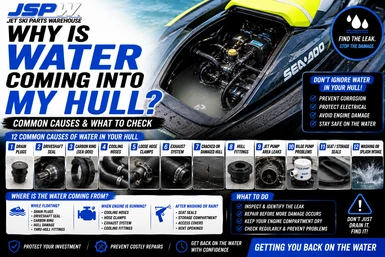
Why Is Water Coming Into My Jet Ski Hull? Common Causes & What To Check
Finding water inside your jet ski hull can be worrying.
A small amount of moisture isn't always unusual, particularly after riding, washing or launching. But if you're regularly draining a significant amount of water—or the water level is increasing while you're riding—you need to find out where it's coming from.
A leaking hose, driveshaft seal or exhaust fitting can start as a relatively minor problem and potentially become serious if ignored.
Whether you ride a Sea-Doo, Yamaha or Kawasaki, here are the most common reasons water can enter your hull and what you should check first.
How Much Water Inside A Jet Ski Hull Is Normal?
Ideally, your engine compartment should remain relatively dry.
A small amount of water can occasionally enter from:
-
Launching and retrieving
-
Wet riders
-
Washing the ski
-
Opening the seat while wet
-
Minor splash or drainage
However, you should investigate if you're finding:
-
Litres of water after every ride
-
Water covering the bottom of the engine compartment
-
Water entering while the engine is running
-
Water level increasing rapidly
-
Bilge pump running frequently
-
Water returning after you've drained the hull
Don't simply keep removing the water.
Find the source.
1. Drain Plugs Missing Or Loose
Start with the obvious.
Drain plugs are one of the easiest things to forget before launching.
Check that every drain plug is:
-
Installed
-
Tight
-
Undamaged
-
Fitted with a healthy seal or O-ring where applicable
Also inspect the drain-plug housing itself for cracks or damage.
A perfectly good plug can't seal a damaged fitting.
2. Damaged Driveshaft Seal
The driveshaft passes through the hull between the engine and jet pump.
A sealing system prevents water entering around the shaft while still allowing it to rotate.
If this seal becomes damaged or worn, water can enter the hull.
The sealing arrangement varies between manufacturers and models, so don't assume every ski uses the same system.
3. Sea-Doo Carbon Ring Problems
Many Sea-Doo models use a carbon-ring driveshaft sealing system.
If the carbon ring or related components wear, water can leak around the driveshaft.
Inspect:
-
Carbon ring
-
Stainless sealing ring
-
Rubber bellows
-
O-rings
-
Retaining clip
-
Driveshaft
Warning signs can include:
-
Water around the driveshaft
-
Excessive black carbon dust
-
Damaged bellows
-
Worn sealing surfaces
If you've confirmed the water is entering around the driveshaft on a Sea-Doo, the carbon ring assembly should be high on your inspection list.
4. Damaged Cooling Hose
Jet skis use multiple hoses to move cooling water through the engine and exhaust systems.
A split or disconnected hose can pump water directly into the hull while the engine is running.
Look for:
-
Cracked hoses
-
Loose connections
-
Split hose ends
-
Water spraying
-
Salt deposits around connections
If the hull stays relatively dry while floating but fills with water once the engine is running, a cooling-system leak becomes particularly worth investigating.
5. Loose Or Broken Hose Clamp
Sometimes the hose itself is perfectly fine.
A loose, corroded or broken clamp may allow water to escape around the connection.
Check clamps around:
-
Cooling hoses
-
Exhaust hoses
-
Water fittings
-
Engine connections
Saltwater corrosion can weaken metal clamps over time.
6. Exhaust System Leak
Jet ski exhaust systems contain cooling water during operation.
A damaged exhaust component can therefore leak water directly into the hull.
Possible problems include:
-
Split exhaust hose
-
Loose clamp
-
Cracked exhaust component
-
Damaged gasket
-
Corroded fitting
You may also notice:
-
Increased exhaust noise
-
Exhaust smell inside the hull
-
Poor performance
-
Water appearing while the engine runs
Exhaust leaks shouldn't be ignored.
7. Cracked Or Damaged Hull
Impact damage can allow water directly through the hull.
Inspect the underside for:
-
Cracks
-
Deep gouges
-
Previous repairs
-
Impact damage
-
Damaged seams
-
Delamination where applicable
Pay particular attention if you've recently:
-
Hit rocks
-
Run onto a beach
-
Contacted a trailer
-
Hit submerged debris
Small cracks can sometimes be difficult to see when the hull is dry.
8. Hull Fittings And Through-Hull Connections
Jet skis have various fittings passing through or mounted to the hull.
Depending on the model, these can include:
-
Drain fittings
-
Cooling fittings
-
Exhaust outlets
-
Cable penetrations
-
Pump-related fittings
Sealant and O-rings can deteriorate with age.
Inspect around fittings for:
-
Cracks
-
Movement
-
Damaged seals
-
Missing sealant
-
Water tracks
9. Jet Pump Area Leaks
The rear pump and driveline area contains multiple sealing points.
If components have recently been removed or serviced, check the installation carefully.
Possible issues include:
-
Damaged seals
-
Missing O-rings
-
Incorrect assembly
-
Loose hardware
-
Damaged pump-related components
If the water problem began immediately after jet pump work, start your investigation there.
10. Bilge System Problem
Some jet skis use a bilge system to remove small amounts of water from the hull.
If that system isn't working correctly, water that would normally be removed can accumulate.
Depending on the ski, inspect:
-
Bilge pump
-
Bilge pickup
-
Hoses
-
Filters or strainers
-
Electrical connections
Remember, however, that the bilge system isn't supposed to compensate for a major leak.
If large amounts of water are entering the hull, find the leak.
11. Storage Compartment Or Seat Seals
Not every leak comes from underneath the ski.
Water can enter from above through:
-
Damaged seat seals
-
Storage compartment seals
-
Missing rubber seals
-
Poorly fitted panels
-
Damaged access covers
This is particularly worth checking if water appears after heavy spray, washing or rain rather than normal operation.
12. Water Entering During Washing
Sometimes the "leak" isn't actually happening on the water.
High-pressure washing around:
-
Seat openings
-
Ventilation openings
-
Storage compartments
-
Engine-bay openings
can introduce water into the hull.
If the ski remains dry after riding but contains water after washing, adjust your cleaning technique before dismantling anything.
How To Find Where The Water Is Coming From
Finding the source is easier if you determine when the water appears.
Water Enters While The Ski Is Sitting In The Water
Check:
-
Drain plugs
-
Driveshaft seal
-
Carbon ring on applicable Sea-Doos
-
Hull damage
-
Through-hull fittings
Water Enters Mainly While The Engine Is Running
Check:
-
Cooling hoses
-
Hose clamps
-
Exhaust system
-
Cooling fittings
Water Appears After Washing Or Heavy Spray
Check:
-
Seat seals
-
Storage seals
-
Access panels
-
Vent openings
Knowing when the leak occurs can dramatically narrow down the possibilities.
Perform A Controlled Inspection
If the ski isn't filling dangerously quickly, a controlled inspection at the ramp can help locate the leak.
With the ski safely secured:
-
Start with a dry hull.
-
Launch the ski but keep it secured.
-
Inspect the engine compartment before starting.
-
Look for water entering.
-
Start the engine if safe.
-
Inspect again for leaks from hoses and fittings.
-
Stop immediately if water begins entering rapidly.
Never put your hands near:
-
Driveshaft
-
Couplers
-
Jet pump components
-
Moving engine components
while the engine is running.
Don't Ignore A Hull Leak
Water entering the engine compartment can damage much more than the source of the leak.
Potential consequences include:
-
Electrical corrosion
-
Starter motor damage
-
Sensor problems
-
Engine corrosion
-
Water ingestion
-
Battery damage
-
Complete sinking in severe cases
A small leak is much cheaper to repair than the damage caused by leaving the ski partially submerged.
What If Water Reaches The Engine?
If the water level becomes high enough to enter the intake or engine, stop attempting to start the ski.
Water inside an engine can cause:
-
Hydrolock
-
Bent connecting rods
-
Internal corrosion
-
Contaminated oil
-
Bearing damage
A flooded engine needs attention quickly.
Don't repeatedly crank it hoping it will clear itself.
How To Prevent Water Leaks
Include these checks in your regular maintenance:
-
Check drain plugs before every launch.
-
Inspect cooling hoses.
-
Check hose clamps for corrosion.
-
Inspect the driveshaft sealing system.
-
Check the hull after impacts.
-
Inspect exhaust components.
-
Keep the engine compartment clean enough to spot leaks.
-
Investigate unexplained water immediately.
Knowing what your hull normally looks like after a ride makes abnormal water entry much easier to identify.
Quick Hull Leak Checklist
If you're finding excessive water inside your jet ski, check:
-
Drain plugs
-
Driveshaft seal
-
Sea-Doo carbon ring where applicable
-
Cooling hoses
-
Hose clamps
-
Exhaust system
-
Hull damage
-
Through-hull fittings
-
Jet pump area
-
Bilge system
-
Seat and storage seals
Start with the simplest checks before dismantling major components.
Need Jet Ski Seals, Hoses Or Driveline Parts?
Jet Ski Parts Warehouse stocks a huge range of parts for repairing water leaks on Sea-Doo, Yamaha and Kawasaki jet skis, including:
-
Carbon rings
-
Carbon seal kits
-
Driveshaft seals
-
Rubber bellows
-
Stainless sealing rings
-
O-rings
-
Cooling hoses
-
Hose clamps
-
Exhaust hoses
-
Exhaust components
-
Driveshafts
-
Jet pump seals
-
Genuine OEM parts
-
Premium aftermarket replacements
-
Quality used OEM components
If you're unsure which part is causing your leak, contact JSPW with your make, model, year and where you're seeing the water enter, and we'll help identify the components you may need.
Final Thoughts
Finding water inside your jet ski doesn't automatically mean you have a major problem—but excessive water should never be considered normal.
Start with the drain plugs, then determine whether the water enters while the ski is floating or only once the engine starts.
That simple distinction can quickly point you toward either a hull/driveshaft sealing problem or a cooling/exhaust system leak.
Find the source early, repair it properly and don't rely on the bilge system to hide the problem.
Keeping the water outside the hull is a lot cheaper than repairing everything it can damage inside.