
10th Jun 2026
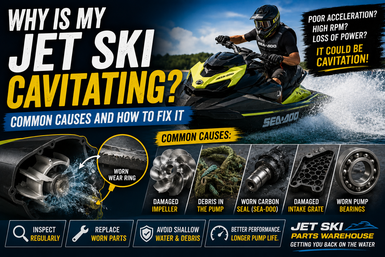
Why Is My Jet Ski Cavitating? Common Causes and How to Fix It
Few things are more frustrating than squeezing the throttle and hearing the engine rev hard while the ski struggles to accelerate.
If your jet ski feels like it's slipping, over-revving or losing thrust, there's a good chance you're experiencing cavitation.
The good news is that cavitation is a common issue and is often relatively straightforward to diagnose and repair.
What Is Cavitation?
Cavitation occurs when the jet pump cannot maintain a solid flow of water through the impeller.
Instead of producing efficient thrust, air enters the pump system, causing the impeller to spin without effectively pushing water.
This can result in:
-
Poor acceleration
-
High engine RPM
-
Reduced top speed
-
Vibration
-
Sluggish take-off performance
Many riders describe it as feeling similar to a slipping clutch.
Damaged Wear Ring
One of the most common causes of cavitation is a worn or damaged wear ring.
The wear ring sits around the impeller and maintains a precise clearance between the impeller blades and housing.
Damage can occur from:
-
Sand ingestion
-
Rocks
-
Shells
-
Debris entering the pump
As the clearance increases, water pressure decreases and cavitation becomes more likely.
Symptoms
-
Poor hole-shot
-
Reduced acceleration
-
Excessive engine revs
-
Performance loss after hitting debris
Damaged Impeller
Even minor damage to an impeller can affect performance.
Bent blades, chips and impact damage disrupt water flow through the pump.
Common causes
-
Striking rocks
-
Sucking up debris
-
Wear from abrasive sand
A damaged impeller often causes:
-
Vibration
-
Cavitation
-
Lower top speed
Debris in the Pump
Sometimes the problem is surprisingly simple.
Common items found in jet pumps include:
-
Fishing line
-
Rope
-
Plastic bags
-
Seaweed
Even a small amount of debris can significantly affect performance.
Always inspect the intake grate and pump area if cavitation appears suddenly.
Carbon Seal Issues (Sea-Doo Models)
Many Sea-Doo models utilise a carbon seal assembly where the driveshaft passes through the hull.
If the seal becomes damaged or worn, air can enter the pump system and contribute to cavitation.
Signs may include:
-
Water inside the hull
-
Reduced performance
-
Intermittent cavitation
Intake Grate Damage
The intake grate guides water into the jet pump.
If damaged, bent or loose, water flow can become turbulent and increase the likelihood of cavitation.
This is particularly common on skis that have struck submerged objects.
Pump Bearing Problems
Jet pump bearings support the driveshaft and impeller assembly.
Excessive bearing wear can allow movement within the pump, affecting performance and potentially causing cavitation.
Warning signs include:
-
Grinding noises
-
Vibration
-
Excessive shaft movement
How to Diagnose Cavitation
Start with a visual inspection:
-
Check the intake grate.
-
Inspect for debris.
-
Examine the wear ring.
-
Inspect the impeller.
-
Check for water inside the hull.
-
Listen for unusual noises from the pump.
Many cavitation issues can be identified without specialised tools.
Preventing Cavitation
The best prevention is regular maintenance.
Avoid:
-
Riding through shallow water
-
Launching in sandy areas
-
Operating near floating debris
Regular inspection of wear rings and impellers can prevent costly repairs and keep your ski performing at its best.
Need Wear Rings, Impellers or Jet Pump Parts?
At Jet Ski Parts Warehouse, we stock a growing range of jet pump components, wear rings, impellers and replacement parts for Sea-Doo, Yamaha, Kawasaki, Honda AquaTrax and Polaris personal watercraft.
If your ski is suffering from cavitation, our team can help you find the right parts to get you back on the water.
Jet Ski Parts Warehouse – Getting You Back On The Water