
7th Oct 2026
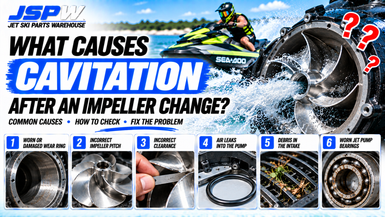
What Causes Cavitation After An Impeller Change?
Replacing the impeller is normally supposed to improve jet ski acceleration and pump performance. So if the ski suddenly starts cavitating after the new impeller is installed, it can be frustrating.
The good news is that the new impeller itself isn't necessarily faulty.
Cavitation after an impeller change is often caused by incorrect clearance, a worn or damaged wear ring, installation problems, air entering the pump, debris, an incorrect impeller, or another existing jet-pump problem.
Sea-Doo troubleshooting information lists damaged impellers, damaged wear rings, clogged intakes and debris around the impeller among causes of cavitation and abnormal propulsion performance. ManualsLib
What Does Cavitation Feel Like?
Typical symptoms include:
- Engine RPM rises quickly
- Jet ski doesn't accelerate proportionally
- Poor hole shot
- Engine sounds like it's "free revving"
- Thrust suddenly comes in and out
- Whining or unusual pump noise
- Problem is worst during hard acceleration
- Ski eventually hooks up and accelerates normally
It can feel almost like a slipping clutch in a car.
The important distinction is that the engine may be producing plenty of power—the jet pump simply isn't converting that power into thrust efficiently.
1. The Impeller-to-Wear-Ring Clearance Is Wrong
This is one of the first things I'd check after an impeller replacement.
The impeller needs to run with a specific small clearance inside the wear ring.
If the clearance is excessive, water can escape around the impeller blade tips instead of being efficiently accelerated through the pump.
Sea-Doo service manuals specify checking impeller-to-wear-ring clearance with a feeler gauge and provide model-specific maximum clearances. One older Sea-Doo specification, for example, lists 1.0 mm (0.040 in) maximum, but this is not a universal specification. ManualsLib
Don't assume the clearance
Always use the specification for:
Make + Model + Year + Pump
A clearance that's acceptable on one jet ski may not be correct on another.
2. The Wear Ring Wasn't Replaced
Installing a brand-new impeller inside an old, worn wear ring can cause problems.
The old ring may have:
- Excessive clearance
- Deep grooves
- Scratches
- An irregular surface
- Damage from the previous impeller
Sea-Doo service documentation specifically instructs technicians to inspect the wear ring for deep scratches, irregular surfaces and other damage. ManualsLib
New impeller + badly worn ring = potentially poor pump performance
This is why replacing the wear ring at the same time is often sensible when the existing ring is worn.
3. The New Impeller Is The Wrong Pitch
This is particularly important if you've installed a performance impeller rather than a direct factory-equivalent replacement.
Changing impeller pitch changes the load placed on the engine.
A higher-pitch impeller generally loads the engine more heavily, while a lower-pitch impeller allows the engine to turn higher RPM. SBT
But an incorrect impeller can create symptoms that are mistaken for cavitation.
For example:
Wrong pitch
Engine RPM rises excessively + speed doesn't increase as expected
may indicate that the impeller isn't correctly matched to the engine and application.
Before blaming the installation, verify:
- Impeller part number
- Pitch
- Diameter
- Blade design
- Model application
- Engine
- Stock vs modified setup
4. The Impeller Isn't Installed Correctly
If the problem appeared immediately after the impeller was changed, installation should be high on the checklist.
Check:
- Impeller is fully seated
- Correct nut/fastener is installed
- Correct torque has been used
- Splines are properly engaged
- Threads are clean
- Required thread locker/lubricant has been used
- Impeller isn't damaged
- Shaft isn't damaged
Modern Sea-Doo service procedures, for example, specify cleaning the impeller and driveshaft splines and following the specified installation procedure. ManualsLib
Don't assume that because the impeller physically fits, the installation is correct.
5. The Impeller Is Damaged
A new impeller can still be damaged during installation or shipping.
Inspect every blade for:
- Nicks
- Bends
- Cracks
- Dents
- Distortion
- Manufacturing damage
An impeller that isn't correctly shaped or balanced can create vibration and other pump problems.
Sea-Doo service information specifically warns that damaged or distorted impellers can become unbalanced and cause vibration and damage to the wear ring, impeller shaft, seals and bearings. ManualsLib
6. The Pump Is Pulling Air
This is an often-overlooked cause.
The jet pump needs a consistent supply of water.
If air gets into the pump, the impeller can lose its ability to maintain the expected water flow and thrust.
Check for:
- Damaged pump seals
- Incorrectly seated O-rings
- Damaged pump housing
- Gaps around the pump
- Damaged intake components
- Loose or incorrectly installed hardware
- Damage to the hull/pump sealing surface
Jet ski cavitation troubleshooting commonly includes checking the pump, intake, seals and other sealing surfaces for air-entry problems. jetdrift.com
7. The Pump Housing Isn't Sealed Properly
If the pump was removed during the impeller installation, pay particular attention to the pump housing seal.
A damaged or incorrectly installed:
- O-ring
- Seal
- Gasket
- Pump mounting surface
can potentially allow air into the pump system.
Modern Sea-Doo service procedures specifically call for inspection/replacement of pump O-rings during jet-pump service. ManualsLib
If cavitation started immediately after the pump was removed and refitted, this becomes particularly important.
8. Debris Is Still In The Intake
It sounds obvious, but check it anyway.
Look for:
- Weed
- Rope
- Fishing line
- Plastic
- Sand
- Sticks
- Other debris
Sea-Doo troubleshooting information lists a clogged jet-pump intake and weeds/debris around the impeller as causes of cavitation and abnormal propulsion behaviour. ManualsLib
A partially blocked intake can restrict the pump's water supply and make the ski feel like it's slipping.
9. The Intake Grate Is Damaged
The intake grate controls how water enters the jet pump.
If it's damaged, missing, bent or incorrectly installed, it can affect the pump's ability to receive clean, consistent water flow.
Inspect:
- Grate condition
- Mounting
- Broken bars
- Missing sections
- Damage around the intake
- Excessive gaps
This is especially important if the ski has previously hit an underwater object.
10. The Impeller Shaft Is Bent
If the old impeller was damaged badly enough to bend the shaft, installing a new impeller won't necessarily solve the problem.
A bent shaft can cause:
- Vibration
- Poor pump efficiency
- Uneven impeller clearance
- Rapid wear of a new wear ring
- Bearing problems
SBT's recent technical guidance also notes that a bent shaft can damage a new wear ring and continue the cavitation problem even after the impeller and ring have been replaced. SBT
If you've installed a new impeller and wear ring but still have the same problem, check shaft alignment/runout.
11. Worn Jet Pump Bearings
A worn bearing can allow the impeller shaft to move.
That movement can alter the impeller's relationship with the wear ring and cause:
- Vibration
- Noise
- Uneven clearance
- Pump inefficiency
- Further wear
Sea-Doo service documentation specifically calls for inspection of the impeller shaft bearings and their contact surfaces for scoring, pitting, chipping and other wear. ManualsLib
If a new impeller is installed on a badly worn pump, the existing bearing problem may become more noticeable.
12. The New Impeller Is Too Aggressive For The Setup
This is more relevant to modified skis.
If the impeller has substantially different characteristics from the factory unit, the engine may not be operating in its intended RPM/load range.
Consider:
- Pitch
- Blade angle
- Diameter
- Engine power
- Supercharger modifications
- ECU tuning
- Intake/exhaust modifications
- Riding altitude
- Rider/load
Don't assume a more aggressive impeller will automatically make the ski faster.
The impeller needs to be matched to the engine's available power and desired RPM range. Watercraft Superstore
How To Diagnose Cavitation After An Impeller Change
If the customer says:
"It was fine before I changed the impeller, and now it cavitates."
I'd work through this order:
1. Confirm the symptom
Does the:
RPM rise without corresponding acceleration?
If yes, investigate the pump.
2. Verify the impeller
Check:
- Correct part number
- Correct pitch
- Correct model
- Correct engine
3. Inspect the impeller
Check for:
- Damage
- Bent blades
- Manufacturing defects
- Correct installation
4. Check the wear ring
Look for:
- Damage
- Excessive clearance
- Deep scratches
- Uneven wear
5. Measure clearance
Use the factory specification for the exact model.
6. Check the pump seals
Inspect:
- O-rings
- Pump housing seal
- Impeller shaft seal
- Other relevant sealing surfaces
7. Inspect the intake
Remove any:
- Weed
- Rope
- Plastic
- Debris
8. Check shaft and bearings
If everything above looks correct, investigate:
- Shaft runout
- Bearing play
- Shaft condition
- Pump housing condition
A Useful Before & After Comparison
If the ski didn't cavitate before the impeller change, but does immediately afterward, compare the old and new setup.
| Check | Old Setup | New Setup |
|---|---|---|
| Impeller part number | Verify | Verify |
| Pitch | Record | Record |
| Diameter | Record | Record |
| Wear ring | Condition | Condition |
| Impeller clearance | Measure | Measure |
| Shaft | Inspect | Inspect |
| Bearings | Inspect | Inspect |
| Pump seals | Inspect | Inspect |
| Intake | Inspect | Inspect |
| Installation torque | — | Verify |
This can quickly reveal whether the new component or installation changed something important.
Don't Just Keep Changing Parts
One of the most expensive ways to diagnose cavitation is:
Impeller → wear ring → bearing → pump → driveshaft → still cavitates
Instead, diagnose the water flow and pump systematically.
The service information supports checking the impeller, wear ring, shaft, bearings and seals rather than treating cavitation as an engine problem. ManualsLib
Final Thoughts
If a jet ski starts cavitating immediately after an impeller replacement, don't automatically assume the new impeller is bad.
The most likely areas to investigate are:
- Incorrect impeller
- Incorrect pitch
- Impeller-to-wear-ring clearance
- Worn or damaged wear ring
- Incorrect installation
- Pump sealing/O-ring problem
- Debris in the intake
- Bent impeller shaft
- Worn jet pump bearing
- Damaged or unsuitable intake components
The first thing I'd verify is the exact impeller part number and the impeller-to-wear-ring clearance. If those are correct, move on to the pump seals, shaft and bearings.
And remember: clearance specifications are model-specific—don't use a measurement from another jet ski as your target.