
21st Oct 2026
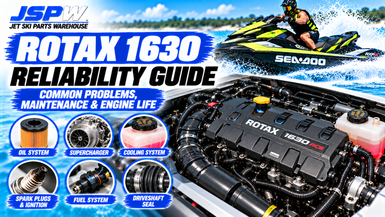
Rotax 1630 Reliability Guide: Common Problems, Maintenance and Engine Life
The Rotax 1630 ACE is one of the key engines used in modern Sea-Doo personal watercraft. It powers a wide range of models, from naturally aspirated recreational machines to high-performance supercharged models.
Overall, owner discussions and available service information suggest the 1630 ACE can be a durable engine when properly maintained. However, reliability depends on the specific engine version, operating conditions, service history and how the craft has been used. Owners have reported good service life from engines with regular maintenance, but forum experiences are not the same as controlled reliability data.
In this guide, we'll cover the main components to watch, common symptoms, maintenance priorities and what to inspect before buying a used Sea-Doo with a Rotax 1630 engine.
1. Understanding the Rotax 1630 ACE

The Rotax 1630 ACE is a three-cylinder, four-stroke engine with a displacement of approximately 1,630 cc. Depending on the model, it is offered in different power configurations, including naturally aspirated and supercharged versions. BRP's published engine range includes 130 hp and 170 hp naturally aspirated variants, as well as substantially more powerful supercharged versions.
That distinction is important when considering reliability.
-
Naturally aspirated versions: Have fewer high-load components and no supercharger.
-
Supercharged versions: Produce more power but add components such as the supercharger and charge-air cooling system that require inspection and maintenance.
-
High-performance versions: May experience greater mechanical and thermal loads, particularly when ridden hard or modified.
A problem reported on one version should not automatically be assumed to affect every Rotax 1630 ACE engine.
2. Common Rotax 1630 Problems to Watch For

1. Oil pressure and lubrication problems
The engine relies on a properly functioning lubrication system to protect its bearings and internal components. Low oil, a blocked filter, an oil-pump fault or water contamination can cause serious damage.
Warning signs: Oil-pressure warnings, abnormal knocking, unexplained oil loss or milky-looking oil.
What to do: Stop the engine if an oil-pressure warning occurs. Check the level using the correct procedure and investigate the cause before restarting.

2. Supercharger wear or failure
Supercharged 230 hp, 300 hp and other performance versions have additional rotating components and a drive system that need to be maintained. Naturally aspirated versions do not have this supercharger.
Warning signs: Unusual mechanical noise, reduced boost, loss of power or inconsistent acceleration.
What to do: Have the supercharger and related components inspected against the correct service schedule. Don't assume every performance loss is caused by the supercharger.

3. Cooling-system faults
The 1630 ACE uses closed-loop cooling for the engine. Coolant circulates through the engine and transfers heat to the surrounding water through a heat exchanger. Some components, including parts of the exhaust system, may still use raw water.
Warning signs: Overheating alarms, low coolant, leaks or repeated temperature warnings.
What to do: Check coolant level and visible hoses when the engine is cold. Investigate leaks and follow the model-specific flushing procedure.

4. Spark plugs and ignition coils
Ignition faults can cause misfires, rough running, difficult starting and reduced power. These symptoms don't necessarily indicate internal engine damage.
Warning signs: Uneven idle, hesitation, misfire codes or poor acceleration.
What to do: Inspect the plugs and ignition system, retrieve diagnostic fault codes and test components before replacing parts.

5. Carbon seal and driveshaft issues
This is not an internal engine fault, but it is an important reliability concern on Sea-Doo watercraft. A leaking driveshaft seal can allow water into the hull, potentially creating a serious safety problem.
Warning signs: Water collecting around the driveshaft, a damaged rubber bellows or unexplained water entering the hull.
What to do: Inspect the sealing assembly and related driveshaft components. Stop using the craft if a significant leak is suspected.

6. Fuel delivery and sensor faults
Fuel pumps, injectors, throttle-body components, sensors and wiring can develop faults that affect starting or performance.
Warning signs: Long cranking, stalling, hesitation, warning lights or reduced power.
What to do: Check fuel quality, fault codes and electrical connections. Use appropriate fuel-pressure and electrical tests to narrow down the cause.
These are areas worth inspecting, not a claim that all Rotax 1630 engines commonly fail in these ways. The engine's own diagnostic codes and the service manual for the specific year should guide repairs.
3. How Reliable Is the Rotax 1630 ACE?
The most useful way to judge reliability is to look at the engine version and its maintenance history rather than relying on a single hour figure.
Owner discussions include reports of 1630 engines operating at 150–200 hours with routine maintenance and no major engine repairs. These reports are encouraging but anecdotal; they cannot establish a guaranteed engine lifespan.
A well-maintained engine with regular servicing, proper winter or off-season storage and no history of overheating may remain reliable for many years. Conversely, a low-hour engine that has been poorly maintained, repeatedly overheated or modified without appropriate supporting maintenance can be a poor purchase.
There is no single guaranteed hour limit at which every Rotax 1630 ACE needs rebuilding. Condition, operating environment, service records and diagnostic results are more useful than an hour reading alone.
4. Naturally Aspirated vs Supercharged Reliability
|
Feature |
Naturally aspirated 130/170 hp |
Supercharged versions |
|---|---|---|
|
Supercharger |
Not fitted |
Additional component requiring inspection |
|
Mechanical complexity |
Lower |
Higher |
|
Maintenance considerations |
Oil, cooling, ignition, fuel and general engine condition |
All standard checks, plus supercharger and charge-air system |
|
Performance-related load |
Generally lower |
Higher, especially under sustained hard use |
|
Used-purchase priority |
Service history and engine condition |
Service history, engine condition and supercharger condition |
The naturally aspirated versions are often the simpler choice for buyers who prioritise straightforward ownership. Supercharged versions provide considerably more performance but require the buyer to pay closer attention to their additional systems.
That doesn't mean every supercharged engine is unreliable. It means there are more components to inspect and maintain.
5. Maintenance That Helps Extend Engine Life

Routine maintenance is one of the most effective ways to reduce preventable failures.
-
Engine oil and filter: Follow the exact model-year service schedule and use oil meeting BRP's specified requirements.
-
Cooling system: Check coolant level and condition, hoses, clamps and leaks. Follow the correct raw-water flushing procedure.
-
Supercharger: Inspect and service it at the intervals specified for the particular engine version.
-
Spark plugs and ignition: Replace worn components as directed and investigate recurring misfires.
-
Fuel system: Use suitable fresh fuel and inspect for leaks, damaged hoses or starting and running issues.
-
Electrical system: Keep battery connections secure and check charging performance if starting or electrical problems occur.
-
Storage: Follow the manufacturer's recommendations for off-season storage and protection against moisture and freezing where relevant.
BRP's operator guides include maintenance schedules for the Rotax 1630 ACE, with checks and service tasks based on elapsed time, operating hours and conditions. Exact requirements vary by model and year.
Do not apply an interval from one Sea-Doo model to another without checking the relevant manual.
6. What to Check Before Buying a Used Rotax 1630 Sea-Doo
Use this checklist when inspecting a used GTI, GTR, GTX, RXT-X, RXP-X, FishPro or another model fitted with the engine.
Pre-purchase checklist
0 of 10
A professional inspection is particularly worthwhile on high-performance supercharged models or any craft with missing service records. A compression test alone cannot rule out every possible fault.
7. When Does a Rotax 1630 Need an Engine Rebuild?
A rebuild should be considered only after diagnosis confirms significant internal wear or damage.
Possible reasons include:
-
Compression or leak-down results outside the manufacturer's specifications.
-
Internal bearing or crankshaft damage.
-
Significant cylinder or piston damage.
-
Oil contamination caused by an internal leak or component failure.
-
Severe damage following overheating or oil-pressure loss.
Before committing to a rebuild, compare the cost of repairing the existing engine with a properly assessed replacement engine. The decision should account for labour, damaged ancillary components, warranty and the overall condition of the craft.
If the engine is misfiring, running poorly or losing power, diagnose the ignition, fuel, cooling and supercharger systems first where applicable. These problems do not automatically mean the engine needs to be rebuilt.
Final Thoughts
The Rotax 1630 ACE can provide long-term service when maintained correctly, but reliability varies with engine version, operating conditions and maintenance history.
The main areas to pay attention to are lubrication, cooling, ignition, fuel delivery, supercharger condition on applicable models, and the driveshaft sealing system.
For buyers, a documented service history and thorough mechanical inspection are more valuable than relying on engine hours or online anecdotes alone. For owners, following the correct service schedule and dealing with warning signs early can help prevent avoidable damage.
Jet Ski Parts Warehouse supplies parts for a range of personal watercraft, helping owners and mechanics source the components needed for routine maintenance and repairs.