
12th Aug 2026
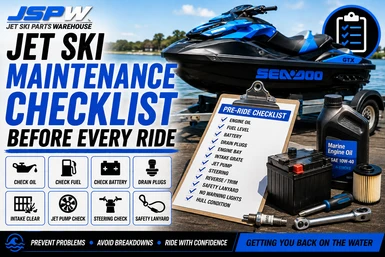
Jet Ski Maintenance Checklist Before Every Ride
A few minutes spent checking your jet ski before launching can prevent breakdowns, expensive repairs and a ruined day on the water.
Whether you ride a Sea-Doo, Yamaha or Kawasaki, a simple pre-ride inspection can help identify problems before they become serious.
From checking your oil and battery to inspecting the jet pump, here's a practical checklist to run through before every ride.
1. Check The Engine Oil
Four-stroke jet skis rely on the correct oil level to protect internal engine components.
Before heading out:
-
Check the oil level according to the manufacturer's procedure.
-
Look for obvious oil leaks.
-
Check the condition of the oil.
-
Make sure the oil cap is secure.
If the oil level is unexpectedly low, find out where it's going rather than simply topping it up repeatedly.
2. Check Your Fuel Level
Don't trust your memory from the last ride.
Confirm you have enough fuel for the trip you're planning, with a sensible reserve for unexpected detours or changing conditions.
Also watch for:
-
Stale fuel
-
Water contamination
-
Fuel leaks
-
Strong fuel smells inside the engine compartment
If you can smell fuel where you shouldn't, don't start the engine until you've found the cause.
3. Inspect The Battery
A weak battery can leave you stranded before you've even left the ramp.
Check:
-
Battery terminals are tight.
-
Terminals are free from corrosion.
-
Battery is securely mounted.
-
Cables aren't damaged.
-
Battery has adequate charge.
If the starter sounds noticeably slower than usual, investigate before heading out.
4. Check The Engine Bay
Remove the seat and spend a minute looking around the engine compartment.
Look for anything unusual, including:
-
Water in the hull
-
Oil leaks
-
Fuel leaks
-
Loose hoses
-
Loose electrical connections
-
Corrosion
-
Damaged hose clamps
-
Unusual smells
Getting familiar with how your engine bay normally looks makes it much easier to notice when something changes.
5. Check Your Drain Plugs
This is one of the simplest checks—and one of the easiest things to forget.
Make sure all drain plugs are:
-
Installed
-
Tight
-
Undamaged
Forgetting a drain plug can quickly turn a relaxing day on the water into a very stressful one.
Make this part of your routine every single time you launch.
6. Inspect The Intake Grate
Check underneath the ski before launching.
Look around the intake grate for:
-
Rope
-
Fishing line
-
Plastic
-
Seaweed
-
Stones
-
Shells
-
Other debris
Anything sucked into the jet pump can damage the impeller and wear ring or cause serious cavitation.
7. Inspect The Jet Pump
Take a quick look through the pump area.
Check for:
-
Visible impeller damage
-
Foreign objects
-
Excessive corrosion
-
Damaged steering components
-
Loose hardware
If you've recently sucked up rocks or debris, inspect the pump more carefully before your next ride.
8. Check Steering Operation
Move the handlebars from full lock to full lock.
Steering should feel smooth without:
-
Binding
-
Excessive resistance
-
Unusual noises
-
Excessive free play
Watch the steering nozzle while moving the handlebars to make sure it's responding correctly.
9. Check Reverse And Trim Systems
If your ski has reverse, electronic braking or trim, check that the system operates normally before launching.
Depending on your model, inspect:
-
Reverse bucket
-
Linkages
-
Cables
-
iBR system
-
RiDE system
-
Trim mechanism
Problems are much easier to deal with on the trailer than while trying to dock.
10. Inspect The Hull
Walk around the entire ski.
Look for:
-
Cracks
-
Impact damage
-
Deep scratches
-
Loose panels
-
Damaged sponsons
-
Missing fasteners
Pay particular attention to the underside if you've recently run into shallow water or contacted something submerged.
11. Check Cooling Hoses
Inspect accessible cooling hoses inside the engine compartment.
Look for:
-
Cracks
-
Kinks
-
Loose clamps
-
Disconnected hoses
-
Salt deposits around fittings
Cooling system problems can quickly lead to overheating.
12. Check The Safety Lanyard
Make sure your safety lanyard is present and in good condition.
Inspect it for:
-
Cracks
-
Damaged clips
-
Excessive wear
-
Damaged attachment points
And always attach it to yourself when riding.
13. Check The Display For Warnings
Start the ski only according to the manufacturer's recommended procedure.
Watch the display for:
-
Warning lights
-
Fault messages
-
Battery warnings
-
Temperature warnings
-
Maintenance reminders
Don't ignore a warning just because the ski appears to run normally.
14. Check Your Trailer
Your pre-ride inspection shouldn't stop at the jet ski.
Before leaving home, check:
-
Tyre condition
-
Tyre pressure
-
Wheel bearings
-
Lights
-
Safety chains
-
Winch strap
-
Coupling
-
Tie-down straps
A perfectly maintained jet ski isn't much use if the trailer doesn't make it to the ramp.
The 60-Second Pre-Ride Check
Once you're familiar with your ski, your essential checks don't take long.
Before every launch, remember:
-
Drain plugs fitted
-
Fuel level checked
-
Oil level checked
-
Battery secure
-
Engine bay inspected
-
No fuel, oil or water leaks
-
Intake grate clear
-
Jet pump clear
-
Steering operating correctly
-
Reverse system operating correctly
-
Safety lanyard ready
-
No warning lights or fault messages
Making this a habit can prevent many of the most common jet ski problems.
After Saltwater Riding
The maintenance doesn't finish when you get back to the ramp.
After riding in saltwater:
-
Flush the ski according to the manufacturer's instructions.
-
Rinse the jet pump and intake area.
-
Wash salt from the hull and trailer.
-
Inspect the engine compartment.
-
Allow the ski to dry.
-
Apply appropriate corrosion protection where required.
Saltwater corrosion is much easier to prevent than repair.
Need Maintenance Parts?
Jet Ski Parts Warehouse stocks a huge range of maintenance and replacement parts for Sea-Doo, Yamaha and Kawasaki jet skis, including:
-
Oil filters
-
Spark plugs
-
Batteries
-
Fuel filters
-
Wear rings
-
Impellers
-
Jet pump parts
-
Bearings and seals
-
Cooling system components
-
Starter motors and solenoids
-
Genuine OEM parts
-
Premium aftermarket parts
-
Quality used OEM components
If you're unsure which parts fit your ski, contact JSPW with your make, model, year and OEM part number where available, and we'll help identify the correct replacement.
Final Thoughts
You don't need to perform a complete service every time you ride.
What matters is developing a consistent pre-ride routine.
Checking your fluids, battery, engine bay, drain plugs, steering and jet pump takes only a few minutes but can identify small problems before they turn into expensive failures.
Do the checks before every ride, maintain your ski properly after saltwater use and you'll spend more time riding—and less time repairing.