16th Sep 2026
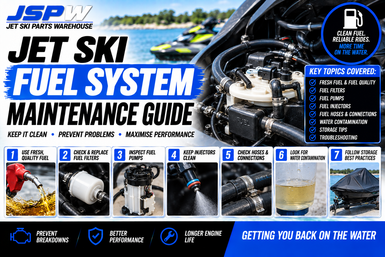
Jet Ski Fuel System Maintenance Guide: Keep Your Fuel System Clean & Reliable
Your jet ski's fuel system has one job: deliver the correct amount of clean fuel to the engine whenever it's needed.
When everything is working properly, you probably don't think about it. But contaminated fuel, blocked filters, deteriorated hoses or a weak fuel pump can quickly cause hard starting, hesitation, poor acceleration or a jet ski that won't run at all.
Whether you own a Sea-Doo, Yamaha or Kawasaki, regular fuel-system maintenance can help prevent problems and keep your ski performing reliably.
Here's what you should check.
Why Fuel System Maintenance Matters
Modern jet skis use sophisticated electronic fuel-injection systems that rely on consistent fuel pressure and clean fuel.
The system may include:
-
Fuel tank
-
Fuel pump
-
Fuel filter or strainer
-
Fuel pressure regulator
-
Fuel injectors
-
Fuel hoses
-
Vent system
-
Electrical connections
-
ECU and associated sensors
A problem anywhere in this system can affect engine performance.
1. Always Start With Fresh Fuel
Fuel quality is one of the easiest things to overlook.
Fuel that sits for extended periods can deteriorate and contribute to:
-
Hard starting
-
Poor combustion
-
Deposits
-
Injector problems
-
Fuel-system contamination
If your jet ski hasn't been used for months and suddenly runs poorly, fuel quality should be one of the first things you consider.
2. Don't Ignore Water In The Fuel
Water contamination can create serious problems in a fuel-injected engine.
It can contribute to:
-
Corrosion
-
Poor running
-
Difficult starting
-
Injector problems
-
Fuel-pump damage
If you suspect water has entered the fuel tank, don't simply add fresh fuel on top and hope the problem disappears.
The contaminated fuel may need to be removed and the system inspected.
3. Inspect The Fuel Tank
Periodically inspect the tank and surrounding area.
Look for:
-
Fuel leaks
-
Cracks
-
Damaged fittings
-
Loose connections
-
Water contamination
-
Strong fuel smell
If you smell petrol inside the hull, don't start the engine until you've found the source.
Fuel vapour inside an enclosed engine compartment can present a serious fire risk.
4. Inspect Fuel Hoses
Fuel hoses deteriorate with age.
Check accessible hoses for:
-
Cracking
-
Hardening
-
Soft spots
-
Abrasion
-
Kinks
-
Loose fittings
-
Fuel staining
Pay particular attention around hose ends and clamps.
A hose that looks fine in the middle may be deteriorating where it attaches to a fitting.
5. Check Fuel Hose Connections
A loose connection can allow fuel to leak or cause problems within the fuel-delivery system.
Inspect:
-
Hose clamps
-
Quick-connect fittings
-
Tank connections
-
Pump connections
-
Fuel-rail connections
Any component that's been disconnected during servicing should be correctly reinstalled and checked for leaks before operation.
6. Maintain The Fuel Filter
The fuel filter protects the pump and injectors from contamination.
As the filter becomes restricted, fuel flow may decrease.
Possible symptoms include:
-
Poor acceleration
-
Hesitation
-
Engine won't reach full RPM
-
Surging
-
Hard starting
-
Stalling
Replacement intervals vary significantly between models, so follow the maintenance schedule for your particular jet ski.
Don't assume every Sea-Doo, Yamaha or Kawasaki uses the same filter arrangement.
7. Check The Fuel Pump
Modern fuel-injected PWCs commonly use an electric fuel pump inside the tank.
When the pump begins failing, it may still provide enough fuel for idle but struggle when the engine is under heavy load.
Common symptoms include:
-
Extended cranking
-
Hard starting
-
Loss of power
-
Hesitation
-
Surging
-
Stalling
-
Poor high-RPM performance
If you suspect a pump problem, proper fuel-pressure testing is much more useful than simply replacing the pump and hoping for the best.
8. Listen For Fuel Pump Prime
On many EFI models, you'll hear the fuel pump briefly operate when the electrical system is activated.
Listen for a short humming sound from the tank.
If you normally hear the pump but suddenly don't, check:
-
Battery
-
Fuse
-
Relay where applicable
-
Wiring
-
Electrical connector
-
Fuel pump
No pump noise doesn't automatically mean the pump itself has failed.
9. Check Fuel Pressure
Fuel pressure is one of the best ways to assess the fuel-delivery system.
If pressure is below specification, possible causes include:
-
Weak fuel pump
-
Restricted filter
-
Blocked pickup
-
Damaged fuel line
-
Pressure-regulator problem
-
Electrical supply problem
Always compare readings with the specification for your exact engine.
There is no universal jet ski fuel-pressure figure.
10. Keep Fuel Injectors Clean
Fuel injectors need to deliver a precisely controlled spray of fuel.
Deposits or contamination can affect their operation.
A problematic injector may cause:
-
Rough idle
-
Misfire
-
Hard starting
-
Hesitation
-
Poor acceleration
-
Uneven cylinder performance
-
Increased fuel consumption
If one cylinder isn't performing correctly, don't assume the ignition coil is always responsible.
The injector should also be considered.
11. Compare The Spark Plugs
Spark plugs can provide useful clues about fuel delivery.
Remove the plugs and compare them.
One Plug Wet With Fuel
The cylinder may be receiving fuel but failing to ignite it correctly.
One Plug Very Dry
Fuel delivery to that cylinder may deserve investigation.
Black, Carbon-Fouled Plugs
The engine may be running excessively rich or experiencing another combustion problem.
Spark-plug appearance isn't a definitive diagnosis, but it can point you in the right direction.
12. Check The Fuel Tank Vent System
As fuel leaves the tank, air needs to replace it.
A restricted tank vent can create abnormal pressure or vacuum conditions and interfere with fuel delivery.
Possible symptoms can include:
-
Engine runs normally initially
-
Performance gradually deteriorates
-
Engine stalls
-
Problem improves after sitting
Inspect the vent system according to the procedure for your particular model.
13. Don't Run The Tank Extremely Low Repeatedly
Regularly operating with very little fuel isn't ideal.
On some systems, fuel helps cool the in-tank fuel pump.
Very low fuel levels can also increase the chance of contaminants or water at the bottom of the tank becoming involved in fuel delivery.
Keeping a sensible amount of fuel in the ski is good practice.
14. Use The Correct Fuel
Always use fuel that meets the manufacturer's requirements for your engine.
This is particularly important on:
-
High-performance engines
-
Supercharged models
-
Modified engines
Using fuel with an inadequate octane rating can cause performance problems and potentially contribute to engine damage.
Check your owner's manual rather than relying on what another jet ski uses.
15. Be Careful With Fuel Additives
Fuel treatments can be useful when they're appropriate for the application.
However, more additive isn't necessarily better.
Use products:
-
Suitable for petrol engines
-
Compatible with your fuel system
-
At the manufacturer's recommended concentration
Don't mix several different treatments together without knowing they're compatible.
16. Use Fuel Stabiliser Before Long-Term Storage
If your jet ski will sit unused for an extended period, fuel stabiliser can help protect the fuel system.
Sea-Doo, for example, recommends adding fuel stabiliser during storage preparation to help prevent fuel deterioration and fuel-system gumming.
Follow the stabiliser manufacturer's instructions and the storage procedure for your particular ski.
17. Don't Leave Known Bad Fuel In The Tank
If fuel is already heavily contaminated or stale, adding stabiliser doesn't magically restore it.
Fuel stabiliser is primarily intended to help preserve fuel that's still in suitable condition.
If the fuel is badly degraded or contaminated with water, removal may be necessary.
18. Older Carburetted Jet Skis Need Extra Attention
Older two-stroke Sea-Doo, Yamaha and Kawasaki models may use carburettors rather than electronic fuel injection.
These systems can suffer from:
-
Blocked jets
-
Dirty carburettors
-
Deteriorated fuel hoses
-
Restricted filters
-
Damaged diaphragms
-
Incorrect adjustment
Old fuel is particularly troublesome in small carburettor passages.
If a carburetted ski has been sitting for years, a complete fuel-system inspection is usually worthwhile before attempting extended operation.
19. Inspect Oil-Injection Systems On Two-Strokes
On two-stroke models using oil injection, the oil-delivery system is just as important as the fuel system.
Inspect:
-
Oil hoses
-
Connections
-
Oil tank
-
Oil filter where applicable
-
Injection pump components
A failure in the lubrication system can cause serious engine damage.
Don't confuse oil-injection hoses with fuel hoses during servicing.
20. Saltwater Can Still Affect The Fuel System
Fuel itself may be contained, but the electrical and external components surrounding the fuel system still live in a marine environment.
Inspect:
-
Fuel-pump connector
-
Injector connectors
-
Earth connections
-
Wiring
-
Hose clamps
-
Metal fittings
Corrosion can cause an electrical fuel-system problem that looks exactly like a failed pump or injector.
Signs Your Fuel System Needs Attention
Watch for:
-
Long cranking before starting
-
Engine cranks but won't start
-
Hesitation
-
Surging
-
Stalling
-
Rough idle
-
Misfires
-
Reduced acceleration
-
Loss of top speed
-
Engine won't reach full RPM
-
Increased fuel consumption
-
Strong fuel smell
-
Fuel leaks
Don't wait for complete failure before investigating.
Quick Fuel System Diagnostic Order
If your jet ski has a suspected fuel problem, work logically.
Step 1 – Check The Fuel
Is it fresh and free from water?
Step 2 – Inspect For Leaks
Check the tank, hoses and fittings.
Step 3 – Check The Battery
A weak electrical supply can affect pump operation.
Step 4 – Listen For Fuel Pump Prime
Confirm the pump is operating where applicable.
Step 5 – Inspect The Fuel Filter
Check for restriction or contamination.
Step 6 – Test Fuel Pressure
Compare it with the manufacturer's specification.
Step 7 – Check Injectors
Particularly if one cylinder behaves differently from the others.
Step 8 – Check Spark And Compression
Make sure the problem really is fuel related.
A systematic approach prevents unnecessary parts replacement.
Fuel System Maintenance Before Every Ride
You don't need to dismantle the fuel system every weekend.
Before riding, simply check:
-
Fuel level
-
Fuel smell
-
Visible leaks
-
Engine compartment condition
Yamaha's pre-operation guidance specifically includes checking fuel quantity and looking for leaks before use.
That simple habit can catch problems early.
During Scheduled Servicing
Your maintenance schedule should include inspection or replacement of applicable:
-
Fuel filter
-
Fuel hoses
-
Fuel connections
-
Tank
-
Fuel pump
-
Fuel-system electrical connections
The exact intervals depend on the model.
Follow the manufacturer's service schedule rather than applying a universal interval.
Fuel System Maintenance Before Storage
Before long-term storage:
-
Inspect the fuel system for leaks.
-
Start with suitable fresh fuel.
-
Add an appropriate fuel stabiliser where recommended.
-
Follow the manufacturer's storage procedure.
-
Don't leave known water-contaminated fuel in the tank.
Proper storage preparation can prevent many of the starting problems that appear months later.
Fuel Safety Matters
Petrol is highly flammable.
When working around the fuel system:
-
Work in a well-ventilated area.
-
Keep sparks and flames away.
-
Don't smoke.
-
Clean spills immediately.
-
Disconnect electrical components only when appropriate.
-
Use fuel-rated replacement hose and components.
-
Verify all connections before starting the engine.
If you're not confident working with pressurised EFI systems, have the work performed by a qualified technician.
Need Jet Ski Fuel System Parts?
Jet Ski Parts Warehouse stocks a huge range of fuel-system components for Sea-Doo, Yamaha and Kawasaki jet skis, including:
-
Fuel pumps
-
Fuel filters
-
Fuel injectors
-
Fuel pressure regulators
-
Fuel hoses
-
Fuel rails
-
Fuel tanks
-
Carburettor components
-
Electrical components
-
Genuine OEM parts
-
Premium aftermarket replacement parts
-
Quality used OEM components
If you're unsure which fuel-system component fits your ski, contact JSPW with your make, model, year and OEM part number where available, and we'll help identify the correct replacement.
Final Thoughts
Good jet ski fuel-system maintenance isn't complicated.
The fundamentals are simple:
Use good fuel. Keep water and contamination out. Inspect hoses and connections. Maintain the filter. Diagnose pressure problems properly.
Most importantly, don't immediately replace the fuel pump whenever a ski develops a fuel-related symptom.
A restricted filter, damaged connection, contaminated fuel, faulty injector or electrical problem can produce very similar symptoms.
Diagnose first, replace what's actually faulty and keep the fuel system clean.
That's the best way to ensure your Sea-Doo, Yamaha or Kawasaki starts easily and performs properly every time you hit the water.