
30th Sep 2026
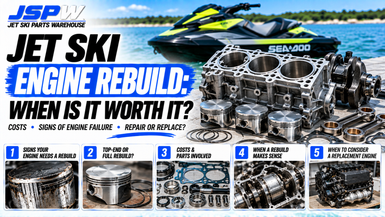
Jet Ski Engine Rebuild: When Is It Worth It?
A jet ski engine rebuild can turn an otherwise unusable PWC into a reliable machine again—but it can also become an expensive project very quickly.
The big question isn't simply “Can the engine be rebuilt?” In most cases, it can.
The better question is:
Is rebuilding this particular engine financially and mechanically worthwhile?
That depends on the engine's condition, the value of the jet ski, the availability of replacement parts, and how much additional damage is found once the engine is opened.
Factory service information for engines such as the Sea-Doo Rotax 1503 shows why proper inspection matters: cylinders, pistons, connecting rods, crankshaft and other components are measured against specific wear limits rather than simply being judged visually. (Device Report)
What Does A Jet Ski Engine Rebuild Actually Involve?
“Engine rebuild” can mean several different things.
Top-end rebuild
A top-end rebuild generally involves components such as:
-
Pistons
-
Piston rings
-
Cylinder inspection/honing
-
Cylinder sleeves or replating where applicable
-
Head gasket
-
Base gasket
-
Other top-end gaskets and seals
-
Valve inspection on four-stroke engines
This can be appropriate when the bottom end is still within specification.
Full engine rebuild
A complete rebuild can involve:
-
Pistons and rings
-
Cylinders
-
Crankshaft
-
Main bearings
-
Connecting rods
-
Rod bearings
-
Seals
-
Gaskets
-
Oil seals
-
Valves and valve-train components
-
Timing components on four-strokes
The exact parts required depend heavily on the engine.
For example, BRP's own rebuild program describes replacing major internal components such as pistons, rings, crankshaft bearings, valves and seals in rebuilt Rotax long blocks. (website)
Signs Your Jet Ski Engine May Need A Rebuild
Several symptoms can indicate serious internal engine wear.
1. Very Low Compression
Low compression is one of the most important clues.
Possible causes include:
-
Worn piston rings
-
Damaged piston
-
Scored cylinder
-
Burnt valve
-
Damaged valve seat
-
Head-gasket failure
However, low compression doesn't automatically mean you need a complete engine rebuild.
A leak-down test and further inspection can help determine where the compression is being lost.
Sea-Doo service procedures, for example, use cylinder leak testing as part of engine diagnosis rather than relying solely on a compression reading. (Device Report)
2. Knocking Or Bottom-End Noise
A deep knocking or rumbling noise from inside the engine is more concerning than a simple top-end noise.
Potential causes include:
-
Connecting-rod bearing problems
-
Crankshaft problems
-
Main bearing wear
-
Excessive crankshaft play
-
Damaged internal components
If the bottom end is damaged, replacing only the pistons and rings may not solve the problem.
The crankshaft and connecting rods need to be properly measured.
3. Metal In The Oil
If you're rebuilding a four-stroke engine and find significant metallic debris in the oil or oil filter, don't simply replace the oil and continue riding.
Metal can indicate wear or failure elsewhere in the engine.
Possible sources include:
-
Bearings
-
Camshaft components
-
Timing components
-
Pistons
-
Crankshaft components
-
Other internal parts
Finding metal is a good reason to investigate the engine before spending money on a partial repair.
4. A Seized Engine
A seized engine doesn't automatically mean it's beyond repair.
The important question is why it seized.
Possible causes include:
-
Lack of lubrication
-
Overheating
-
Water ingestion
-
Broken internal component
-
Piston failure
-
Bearing failure
-
Foreign material damage
Factory Sea-Doo procedures specifically call for checking connecting-rod straightness and crankshaft deflection/misalignment when repairing a seized engine. (SeaDoo Manuals)
That illustrates an important point:
Don't just free up a seized piston and install new rings. Find out what caused the seizure.
5. Severe Cylinder Damage
Once the engine is apart, inspect the cylinders carefully.
Look for:
-
Deep scoring
-
Cracks
-
Excessive wear
-
Taper
-
Out-of-round condition
-
Damaged cylinder coating or sleeve
Factory specifications can determine whether a cylinder can be reused, honed, replated or replaced.
For example, the Rotax 1503 service information specifies measuring cylinder bore at multiple positions and provides limits for taper and out-of-round conditions. (Device Report)
6. Water In The Engine
Water ingestion can make an engine rebuild much more complicated.
If water has entered the cylinders, the engine should not simply be restarted repeatedly.
Water can lead to:
-
Corrosion
-
Bent connecting rods
-
Bearing damage
-
Piston damage
-
Cylinder damage
-
Crankshaft problems
The longer contaminated components sit, the greater the risk of corrosion.
When Is A Top-End Rebuild Enough?
This is one of the biggest decisions.
If the bottom end is healthy and the problem is isolated to the piston/cylinder/head area, a top-end rebuild may be appropriate.
For example:
Good crankshaft + good bearings + acceptable cylinder = potentially top-end rebuild
But:
Damaged crankshaft + damaged bearings + scored cylinder = likely full rebuild
Don't decide until the engine has been properly inspected and measured.
When Should You Rebuild The Entire Engine?
A full rebuild becomes more appropriate when multiple major components are outside specification.
Examples include:
-
Bad crankshaft
-
Excessive bearing clearance
-
Damaged connecting rod
-
Severely scored cylinders
-
Multiple damaged pistons
-
Major overheating damage
-
Significant water ingestion
-
Bottom-end noise
-
Severe internal contamination
The cost can increase substantially once the crankshaft and bottom end are involved.
The Real Question: Is The Jet Ski Worth Rebuilding?
This is where the numbers matter.
Before buying parts, calculate:
Jet ski value
What is the approximate value of the ski in good running condition?
Then calculate:
Engine rebuild cost
Include:
-
Pistons
-
Rings
-
Gaskets
-
Bearings
-
Crankshaft
-
Cylinders
-
Valves
-
Timing components
-
Seals
-
Machine-shop work
-
Labour
-
Fluids
-
Any special tools
Then don't forget the rest of the ski.
You may also discover that it needs:
-
Battery
-
Starter
-
Fuel pump
-
Injectors
-
Supercharger service
-
Wear ring
-
Impeller
-
Jet pump bearings
-
Carbon ring
-
Steering components
-
Electrical repairs
That's why a cheap non-running jet ski isn't necessarily a cheap project.
Don't Forget The Cause Of The Failure
This is one of the most important parts of an engine rebuild.
If the original engine failed because of another system, rebuilding the engine alone may not fix the underlying problem.
For example:
Overheating
Investigate:
-
Cooling system
-
Water passages
-
Thermostat
-
Cooling hoses
-
Water pump
-
Exhaust cooling
Oil starvation
Investigate:
-
Oil system
-
Oil pump
-
Oil passages
-
Oil filter
-
Oil level
-
Previous maintenance
Water ingestion
Investigate:
-
Exhaust system
-
Intake system
-
Waterbox
-
Seals
-
Hull water intrusion
Supercharger-related failure
On applicable supercharged models, inspect the supercharger and related components rather than treating the engine damage in isolation.
OEM vs Aftermarket Rebuild Parts
This is another major decision.
There are aftermarket options for many common jet ski engines, including:
-
Pistons
-
Rings
-
Gaskets
-
Bearings
-
Connecting rods
-
Crankshafts
-
Cylinder components
Brands such as WSM, Wiseco, Wossner, Hot Rods and Pro-X offer various PWC engine components.
The important thing is to match the component to the exact engine and specification.
Don't choose a piston simply because the diameter appears correct.
You need to consider things such as:
-
Bore size
-
Piston-to-cylinder clearance
-
Compression ratio
-
Ring specification
-
Pin size
-
Engine application
-
Oversize requirements
Machine Work Is Extremely Important
A rebuild isn't simply a matter of installing new parts.
Depending on the engine, the machine shop may need to:
-
Measure cylinders
-
Hone cylinders
-
Replate cylinders
-
Install sleeves
-
Check crankshaft runout
-
Measure bearing clearances
-
Inspect connecting rods
-
Check piston clearance
-
Inspect the cylinder head
-
Check valves and seats
This is one reason factory specifications are so important.
For example, the Rotax 1503 service manual provides specific inspection measurements for cylinders, pistons and valve components. (Device Report)
2-Stroke vs 4-Stroke Rebuilds
The decision can also be different depending on the engine type.
2-Stroke
A 2-stroke rebuild may involve:
-
Piston
-
Rings
-
Wrist pin
-
Bearings
-
Crankshaft
-
Cylinder
-
Gaskets
-
Seals
A top-end rebuild can sometimes be relatively straightforward if the crankshaft and bottom end are healthy.
4-Stroke
A four-stroke can involve substantially more components.
Depending on the engine:
-
Pistons
-
Rings
-
Valves
-
Valve springs
-
Valve seals
-
Timing chain
-
Tensioner
-
Camshafts
-
Bearings
-
Crankshaft
-
Connecting rods
-
Gaskets
-
Oil system components
That's why it's particularly important to diagnose the failure before ordering parts.
A Simple Rebuild Decision Checklist
Before committing to the rebuild, answer these questions:
Engine
-
What actually caused the failure?
-
What are the compression readings?
-
Has a leak-down test been performed?
-
Is there metal in the oil?
-
Is the crankshaft good?
-
Are the cylinders reusable?
-
Are the connecting rods within specification?
Jet Ski
-
What is the ski worth when running?
-
What other repairs does it need?
-
Is the hull in good condition?
-
Is the jet pump healthy?
-
Is the electrical system good?
-
Is the fuel system good?
-
Is the supercharger healthy, if fitted?
Rebuild
-
Can the required parts still be sourced?
-
Are quality aftermarket parts available?
-
What machine work is required?
-
Who will assemble the engine?
-
What will the total finished cost be?
When A Rebuild Makes Sense
A rebuild can make sense when:
-
The hull and body are in good condition
-
The jet pump is healthy
-
The electrical system is usable
-
Parts are readily available
-
The engine failure is well understood
-
The crankcase and major components are reusable
-
You can perform some of the labour yourself
-
The finished ski will justify the investment
It can be particularly attractive when the ski is otherwise complete and the engine is the main problem.
When A Replacement Engine May Make More Sense
Sometimes rebuilding isn't the best route from a practical standpoint.
Consider a replacement engine or long block when:
-
The crankcase is badly damaged
-
Multiple major components are destroyed
-
Machine-shop costs are very high
-
Parts are difficult to source
-
You need the ski operational quickly
-
A reputable rebuilt engine is available
-
The total rebuild cost approaches the cost of a suitable replacement
BRP has historically offered rebuilt engines, short blocks, cylinders and crankshafts through its Rebuild Center, illustrating that a professionally rebuilt replacement assembly can be an alternative to rebuilding everything yourself. (website)
Don't Forget The Jet Pump
If the engine has failed catastrophically, don't automatically assume the rest of the ski is perfect.
Before putting a rebuilt engine back into the hull, inspect the propulsion system.
Check:
-
Impeller
-
Wear ring
-
Jet pump bearings
-
Driveshaft
-
Coupler
-
Intake grate
-
Pump housing
There's little point spending heavily on an engine only to discover that the jet pump also requires major repairs.
Final Thoughts
A jet ski engine rebuild can absolutely be worthwhile, but the decision should be based on measurements and the total cost—not just the price of a piston kit.
The best approach is:
Diagnose → Disassemble → Measure → Price the parts → Assess the whole ski → Decide
Don't order a complete rebuild kit before you know what the engine actually needs.
A piston and gasket kit might solve one engine. Another may require cylinders, crankshaft, bearings, valves and extensive machine work.
For JSPW customers, this is where quality engine components such as pistons, piston rings, connecting rods, crankshafts, bearings and gasket kits become part of the rebuild equation.
SEO Title
Jet Ski Engine Rebuild: When Is It Worth It?
Meta Description
Should you rebuild your jet ski engine? Learn the signs of engine failure, top-end vs full rebuilds, costs, machine work and when rebuilding is worth it.