
9th Jul 2026
How To Tell If Your Jet Ski Starter Motor Is Failing
There's nothing worse than heading to the boat ramp, pressing the start button and hearing your jet ski struggle to crank—or not crank at all.
While a flat battery is often the first thing people suspect, the starter motor itself is another common cause of starting problems.
Starter motors wear out over time, especially on jet skis that are frequently used in saltwater or have high engine hours. Recognising the warning signs early can prevent you from being stranded and help avoid unnecessary damage to your starting system.
Here's how to tell if your starter motor is on its way out.
What Does A Starter Motor Do?
The starter motor is responsible for turning the engine over when you press the start button.
It receives power from the battery through the starter solenoid and rotates the engine until it starts running under its own power.
Without a functioning starter motor, your engine simply won't crank.
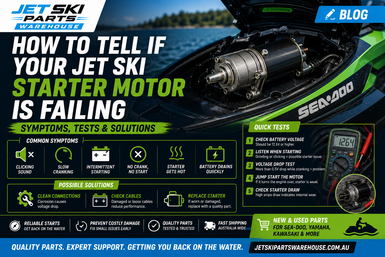
1. The Engine Won't Crank
The most obvious symptom is pressing the start button and nothing happens.
You may notice:
-
Silence
-
A single click
-
Repeated clicking
-
The starter motor failing to engage
Before replacing the starter motor, always check the battery and starter solenoid first.
2. Slow Cranking
If your engine turns over much slower than normal—even with a fully charged battery—the starter motor may be struggling.
Common causes include:
-
Worn brushes
-
Internal corrosion
-
Damaged armature
-
Worn bearings
A slow starter often gets worse over time before failing completely.
3. Intermittent Starting Problems
Does your jet ski start perfectly one day but refuse the next?
Intermittent starter motor faults are often caused by:
-
Worn internal contacts
-
Failing brushes
-
Corrosion
-
Loose electrical connections
Don't ignore occasional starting issues—they rarely fix themselves.
4. Grinding Or Unusual Noises
A healthy starter motor should operate smoothly.
Grinding, squealing or metallic noises may indicate:
-
Damaged starter drive
-
Worn gears
-
Internal bearing failure
-
Misalignment
Continuing to use the ski can cause damage to the starter gear or flywheel.
5. Smoke Or Burning Smell
A burning electrical smell after repeated starting attempts is a serious warning sign.
This may indicate:
-
Overheated windings
-
Electrical short circuits
-
Seized bearings
-
Excessive current draw
Stop attempting to start the engine until the fault has been diagnosed.
6. Starter Motor Gets Hot
It's normal for a starter motor to warm slightly during operation.
However, excessive heat after only a few starting attempts can indicate:
-
Internal electrical resistance
-
Mechanical binding
-
Bearing failure
Overheating can quickly lead to complete starter failure.
7. Visible Corrosion
Jet skis spend their lives around water, making corrosion one of the biggest enemies of electrical components.
Inspect the starter motor for:
-
Rust
-
White corrosion
-
Salt deposits
-
Damaged wiring
-
Loose terminals
Regular flushing and corrosion protection can dramatically extend starter life.
Common Causes Of Starter Motor Failure
Starter motors eventually wear out, but several factors can shorten their lifespan.
These include:
-
Saltwater corrosion
-
Water intrusion
-
Weak batteries
-
Loose electrical connections
-
Repeated long cranking periods
-
Worn starter drives
-
High engine hours
Routine maintenance helps reduce unnecessary strain on the starting system.
How To Test A Starter Motor
Before replacing the starter motor, check these items first:
Battery Voltage
A healthy battery should be fully charged and maintain adequate voltage while cranking.
Starter Solenoid
Listen for the solenoid clicking when the start button is pressed.
A faulty solenoid can mimic a bad starter motor.
Electrical Connections
Inspect:
-
Battery terminals
-
Earth straps
-
Starter cable
-
Solenoid connections
Corrosion or loose terminals can prevent sufficient current from reaching the starter motor.
Voltage Test
Using a multimeter, check whether battery voltage reaches the starter motor while pressing the start button.
If voltage is present but the motor doesn't turn, the starter motor is likely faulty.
Can A Starter Motor Be Repaired?
Some starter motors can be rebuilt by replacing:
-
Brushes
-
Bearings
-
Bushes
-
Seals
However, severe corrosion or damaged armatures often make replacement the more reliable option.
Prevent Starter Motor Problems
To maximise the life of your starter motor:
-
Flush your jet ski after every saltwater ride.
-
Keep battery terminals clean.
-
Apply corrosion inhibitor to exposed electrical components.
-
Avoid excessive cranking.
-
Replace weak batteries promptly.
-
Inspect wiring during annual servicing.
Simple preventative maintenance can save you from an unexpected breakdown.
Need A Replacement Starter Motor?
At Jet Ski Parts Warehouse, we stock a huge range of starter motors for Sea-Doo, Yamaha and Kawasaki jet skis, including:
-
Genuine OEM starter motors
-
Premium aftermarket starters
-
Starter drives
-
Starter gears
-
Starter solenoids
-
Electrical components
-
Quality used OEM parts
Our team can help you identify the correct starter motor for your model and get you back on the water quickly.
Final Thoughts
A failing starter motor often gives plenty of warning before it stops working completely. Slow cranking, intermittent starting, unusual noises and excessive heat are all signs that something isn't right.
By diagnosing the problem early and replacing worn components before they fail, you can avoid inconvenient breakdowns and protect your jet ski's starting system for years to come.