
16th Jun 2026
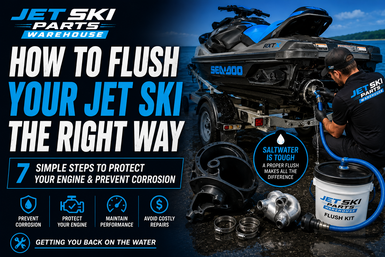
How To Flush Your Jet Ski The Right Way: 7 Simple Steps To Protect Your Engine
If you ride in saltwater, properly flushing your jet ski after every ride is one of the most important maintenance tasks you can perform.
Salt deposits left inside your cooling system can cause corrosion, block cooling passages, reduce performance and eventually lead to expensive repairs.
The good news is that flushing your jet ski only takes a few minutes and can significantly extend the life of your engine and cooling components.
Follow these 7 simple steps to keep your Sea-Doo, Yamaha or Kawasaki running at its best.
Why Flushing Matters
Every time you ride in saltwater, salt and minerals remain inside the cooling system, exhaust system and engine passages.
Without regular flushing, these deposits can lead to:
-
Corrosion inside cooling passages
-
Damaged exhaust components
-
Blocked cooling systems
-
Overheating issues
-
Reduced engine lifespan
-
Expensive repair bills
A few minutes of maintenance after each ride can save thousands of dollars in repairs later.
Step 1: Remove The Ski From The Water
Before flushing, ensure the jet ski is safely secured on a trailer or flush stand.
Allow excess water to drain from the hull and inspect the ski for any obvious damage or debris.
This is also a great time to check the intake grate for weeds, ropes or other obstructions.
Step 2: Locate The Flush Connection
Most modern jet skis have a dedicated flush fitting located at the rear of the ski.
Depending on your model, this may be:
-
A garden hose fitting
-
Quick-connect flush port
-
Dedicated flushing adapter
Always refer to your owner's manual if you're unsure of the exact location.
Step 3: Connect The Hose Before Starting The Engine
Attach your hose securely to the flush connection.
Make sure all fittings are tight and there are no leaks.
Important: Never turn the water on yet.
This is one of the most common mistakes owners make.
Step 4: Start The Engine First
Before turning on the water supply, start the engine.
This allows the cooling system and exhaust pressure to operate correctly.
Turning water on before starting the engine can force water back into the engine on certain models, potentially causing serious damage.
Always remember:
Engine First. Water Second.
Step 5: Turn On The Water And Flush For 2–5 Minutes
Once the engine is running smoothly, turn on the water supply.
Allow clean fresh water to circulate through the cooling system for approximately 2 to 5 minutes.
During flushing:
-
Monitor water flow
-
Check for leaks
-
Watch for unusual noises
-
Ensure cooling water exits normally
Avoid excessive water pressure.
More pressure does not equal a better flush.
Step 6: Turn Off The Water First
This is the most important step.
Before shutting down the engine, turn the water supply off completely.
Allow the engine to continue running for approximately 10–15 seconds.
This helps clear excess water from the exhaust system.
Remember the flushing sequence:
Start-Up
Engine ON → Water ON
Shut-Down
Water OFF → Engine OFF
Following this order helps prevent water ingestion and potential engine damage.
Step 7: Dry And Protect
After flushing:
-
Disconnect the hose
-
Remove excess water from the hull
-
Open storage compartments to air out
-
Wipe down external surfaces
-
Apply a corrosion inhibitor to exposed metal components
For saltwater riders, using a quality corrosion protection spray can help protect electrical connections, fasteners and engine components.
Common Flushing Mistakes To Avoid
Leaving Saltwater In The System
Even a single missed flush can accelerate corrosion.
Turning The Water On Before Starting
This can force water where it shouldn't go.
Flushing For Too Long
More is not always better. A few minutes is generally sufficient.
Forgetting To Inspect While Flushing
Use the opportunity to spot leaks, loose clamps and other issues early.
A Few Minutes Can Save Thousands
Proper flushing is one of the easiest ways to extend the life of your jet ski.
Whether you ride a Sea-Doo, Yamaha or Kawasaki, following these seven simple steps can help prevent corrosion, reduce maintenance costs and keep your ski performing at its best season after season.
Need replacement cooling components, flush fittings, hose clamps, exhaust parts or other jet ski maintenance items?
JSPW stocks a huge range of new, aftermarket and quality used jet ski parts to help keep you on the water.