
5th Aug 2026
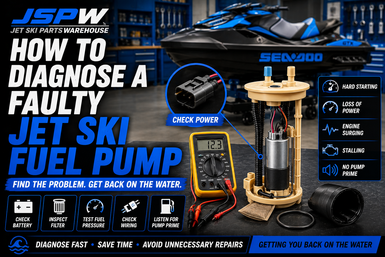
How To Diagnose A Faulty Jet Ski Fuel Pump
Your jet ski starts running perfectly, then suddenly loses power, hesitates or won't start at all. While many riders immediately suspect spark plugs or the battery, the real culprit could be the fuel pump.
The fuel pump is responsible for delivering a constant supply of fuel to the engine. When it begins to fail, performance can quickly deteriorate, leaving you stranded at the boat ramp or out on the water.
Whether you ride a Sea-Doo, Yamaha or Kawasaki, here's how to identify the warning signs of a failing fuel pump and diagnose the problem safely.
What Does A Fuel Pump Do?
Modern fuel-injected jet skis use an electric fuel pump located inside the fuel tank.
Its job is to:
-
Supply fuel at the correct pressure
-
Deliver consistent fuel flow
-
Maintain engine performance
-
Ensure reliable starting
Without adequate fuel pressure, even a healthy engine won't run properly.
Common Signs Of A Faulty Fuel Pump
1. Hard Starting
One of the earliest symptoms is extended cranking before the engine starts.
You may notice:
-
Long crank times
-
Engine starts then stalls
-
Engine won't start at all
Always rule out battery and ignition issues first.
2. Loss Of Power At High RPM
A weak fuel pump may provide enough fuel at idle but struggle under load.
Typical symptoms include:
-
Poor acceleration
-
Engine won't reach full RPM
-
Loss of top speed
-
Hesitation under heavy throttle
This often becomes more noticeable as the engine warms up.
3. Engine Surging
If fuel pressure fluctuates, the engine may repeatedly gain and lose power.
Surging is commonly caused by:
-
Weak fuel pump
-
Restricted fuel filter
-
Contaminated fuel
-
Blocked pickup
4. Engine Stalls Unexpectedly
A failing fuel pump can suddenly stop delivering fuel.
The engine may:
-
Stall at idle
-
Stall while cruising
-
Restart after cooling down
-
Become progressively harder to restart
5. No Fuel Pump Prime
Most modern jet skis briefly run the fuel pump when the ignition is switched on.
Listen carefully.
You should hear a short humming sound from the fuel tank.
No sound could indicate:
-
Faulty fuel pump
-
Blown fuse
-
Faulty relay
-
Wiring problem
-
Battery issue
Step 1: Check The Battery
Fuel pumps require adequate voltage.
Before replacing the pump:
-
Charge the battery
-
Check battery terminals
-
Inspect earth connections
Low voltage can mimic fuel pump failure.
Step 2: Inspect The Fuel
Old or contaminated fuel causes many fuel system problems.
Look for:
-
Water contamination
-
Stale fuel smell
-
Dirt or debris
-
Phase-separated ethanol fuel
Fresh fuel should always be your starting point.
Step 3: Check The Fuel Filter
A blocked fuel filter can produce exactly the same symptoms as a weak fuel pump.
Inspect or replace the filter if it's overdue for service.
Many apparent fuel pump failures are actually restricted filters.
Step 4: Listen For The Pump
Turn the key on without starting the engine.
If you don't hear the pump priming:
Check:
-
Fuel pump fuse
-
Fuel pump relay
-
Wiring connections
-
Pump electrical connector
If power reaches the pump but it remains silent, replacement is often required.
Step 5: Measure Fuel Pressure
The most accurate way to diagnose a fuel pump is with a fuel pressure gauge.
Compare the measured pressure with your manufacturer's specifications.
Low pressure usually indicates:
-
Worn fuel pump
-
Blocked filter
-
Restricted fuel line
-
Faulty pressure regulator
Always use the correct testing procedure for your specific model.
Step 6: Inspect Electrical Connections
Moisture and saltwater can corrode electrical connectors.
Inspect:
-
Pump connector
-
Battery terminals
-
ECU connections
-
Earth cables
Clean any corrosion and apply dielectric grease where appropriate.
Common Causes Of Fuel Pump Failure
Fuel pumps often fail because of:
-
Old fuel
-
Contaminated fuel
-
Running the tank very low repeatedly
-
Blocked filters
-
Corrosion
-
High engine hours
-
Water contamination
Preventative maintenance greatly extends fuel pump life.
How To Prevent Fuel Pump Problems
Simple habits can reduce the risk of failure:
✔ Use fresh fuel
✔ Replace fuel filters regularly
✔ Avoid storing stale fuel
✔ Add fuel stabiliser before long-term storage
✔ Keep the fuel tank clean
✔ Service your ski according to the manufacturer's schedule
A well-maintained fuel system is far more reliable.
Need A Replacement Fuel Pump?
At Jet Ski Parts Warehouse, we stock a wide range of fuel system components for Sea-Doo, Yamaha and Kawasaki jet skis, including:
-
Fuel pumps
-
Fuel filters
-
Fuel injectors
-
Fuel pressure regulators
-
Fuel hoses
-
Genuine OEM parts
-
Premium aftermarket replacements
-
Quality used fuel system components
If you're unsure which fuel pump suits your model, our experienced team can help you choose the correct replacement.
Final Thoughts
A faulty fuel pump can cause everything from difficult starting to complete engine failure, but the symptoms often resemble other fuel or electrical problems.
By checking the battery, fuel quality, fuel filter, pump operation and fuel pressure in a logical order, you can accurately diagnose the problem without replacing parts unnecessarily.
Keeping your fuel system clean and performing regular maintenance will help ensure your jet ski starts easily, performs reliably and keeps you on the water all season long.