
9th Sep 2026
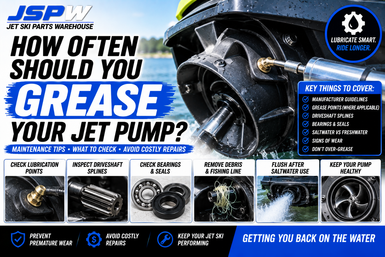
How Often Should You Grease Your Jet Ski Jet Pump?
Your jet ski's jet pump operates in one of the harshest environments on the machine.
It spends its life submerged in water, spinning at high RPM and dealing with salt, sand, debris and constant load. Naturally, many owners assume the pump needs to be regularly packed with grease.
But how often should you actually grease a jet ski jet pump?
The answer depends on the ski.
Some jet pump assemblies have specific lubrication requirements, while others use sealed bearings or different lubrication systems and should not simply be filled with grease.
Whether you own a Sea-Doo, Yamaha or Kawasaki, here's what you need to know.
What Does Jet Pump Grease Actually Do?
Where grease is specified, its purpose may include lubricating and protecting components such as:
-
Bearings
-
Driveshaft splines
-
Seals
-
O-rings
-
Pump shaft components
Marine grease can also help protect appropriate components against moisture and corrosion.
However, grease should only be applied where the manufacturer specifies it.
More grease isn't necessarily better.
So, How Often Should You Grease Your Jet Pump?
There isn't one universal interval for every jet ski.
The correct schedule depends on:
-
Manufacturer
-
Model
-
Year
-
Jet pump design
-
Bearing arrangement
-
Saltwater or freshwater use
-
Operating hours
-
Service history
For this reason, the safest rule is:
Follow the lubrication schedule and procedure specified in the service manual for your exact jet ski.
Don't assume that because one Yamaha, Kawasaki or Sea-Doo requires grease in a particular location that another model does too.
When Should You Inspect Jet Pump Lubrication?
Even where there isn't a simple "grease every X hours" requirement, there are several occasions when the pump should receive closer attention.
During Scheduled Servicing
Inspect the pump according to the manufacturer's maintenance schedule.
This may include checking:
-
Bearings
-
Seals
-
Impeller
-
Pump housing
-
Driveshaft
-
Splines
When The Jet Pump Is Removed
Whenever you remove the pump for:
-
Impeller replacement
-
Wear component replacement
-
Bearing repair
-
Driveshaft work
-
Pump rebuild
inspect the lubrication points specified for your model.
It's much easier to address them while the pump is already apart.
After Water Contamination
If water has entered a bearing cavity or other lubricated area, simply adding more grease may not solve the problem.
Water contamination can lead to:
-
Rust
-
Bearing damage
-
Seal deterioration
-
Lubricant breakdown
The pump may need to be dismantled, inspected and repaired.
After Long-Term Saltwater Use
Saltwater accelerates corrosion dramatically.
If your ski spends most of its life in saltwater, regular jet pump inspections become particularly important.
Pay attention to:
-
Bearing condition
-
Seals
-
Driveshaft splines
-
Fasteners
-
Pump housing
-
Corrosion
Preventative inspection is far cheaper than replacing a damaged pump.
What Type Of Grease Should You Use?
Don't reach for whatever grease happens to be sitting in the workshop.
Where grease is required, use the lubricant specified by the manufacturer or a verified equivalent suitable for that application.
Depending on the component, requirements may include:
-
Marine-grade water-resistant grease
-
Specific bearing grease
-
Specific spline lubricant
-
Manufacturer-specified lubricant
Different components can require different products.
One grease isn't automatically suitable for every part of the jet pump.
Don't Over-Grease The Pump
More grease does not mean more protection.
Over-greasing certain assemblies can:
-
Damage seals
-
Create excessive pressure
-
Push seals out of position
-
Contaminate areas that should remain clean
If the manufacturer specifies an amount, follow it.
Don't simply keep pumping grease into a fitting until something comes out somewhere else.
What About The Driveshaft Splines?
Driveshaft splines are another important lubrication point on many jet skis.
When the jet pump or driveshaft is removed, inspect the splines for:
-
Dryness
-
Rust
-
Corrosion
-
Wear
-
Damaged teeth
Where specified, apply the correct lubricant before reassembly.
Ignoring dry or corroded splines can eventually lead to expensive driveline repairs.
What About Jet Pump Bearings?
Jet pump bearings operate under significant load.
Depending on the pump design, they may be:
-
Grease lubricated
-
Oil lubricated
-
Permanently sealed
-
Part of a serviceable bearing assembly
This is why blindly adding grease is a bad idea.
You first need to know how your particular pump is designed to be lubricated.
Signs Your Jet Pump Needs Attention
Lubrication problems aren't always obvious until bearing damage has already started.
Watch for:
Grinding Or Rumbling
A rough mechanical noise from the rear of the ski may indicate bearing wear.
Whining
A new whining noise that changes with RPM deserves investigation.
Excessive Vibration
Vibration can be caused by:
-
Pump bearings
-
Damaged impeller
-
Driveshaft problems
-
Foreign objects
Play In The Pump Shaft
Excessive movement can indicate worn bearings.
Water Contamination
Water where lubricant should be is a warning that a seal may have failed.
Corrosion
Rust or heavy corrosion around pump components shouldn't be ignored.
Can You Just Add Grease To A Noisy Bearing?
Generally, no.
If a bearing is already:
-
Grinding
-
Loose
-
Rough
-
Corroded
adding grease isn't a proper repair.
The bearing and associated seals should be inspected and replaced where necessary.
Grease is preventative maintenance—not a cure for mechanical damage.
Saltwater Riders Need To Be Particularly Careful
If you ride in saltwater, the jet pump deserves extra attention.
After riding:
-
Flush the ski correctly.
-
Rinse the jet pump with fresh water.
-
Rinse the intake area.
-
Remove salt deposits.
-
Inspect for fishing line or debris.
-
Allow components to dry.
Fresh-water rinsing and correct servicing can do more for pump longevity than randomly adding grease.
Fishing Line Can Destroy Jet Pump Seals
One easily overlooked problem is fishing line wrapped around the driveshaft or pump shaft.
Fishing line can work its way into sealing surfaces and damage seals.
That can allow water into areas containing bearings or lubricant.
Inspect the pump regularly, especially if you ride near:
-
Fishing areas
-
Boat ramps
-
Marinas
Remove wrapped line as soon as you find it.
Should You Grease A Jet Pump Before Storage?
Not automatically.
For long-term storage, follow the manufacturer's storage procedure.
More important tasks may include:
-
Proper flushing
-
Cleaning the pump
-
Removing debris
-
Checking for corrosion
-
Inspecting the impeller
-
Inspecting the driveshaft
-
Servicing lubrication points where specified
Don't fill the pump with grease simply because the ski won't be used for several months.
What Should You Check During A Jet Pump Service?
A proper inspection should look beyond lubrication.
Check:
-
Impeller condition
-
Pump housing
-
Impeller clearance
-
Bearings
-
Seals
-
Driveshaft splines
-
Steering nozzle
-
Reverse components
-
Intake grate
-
Corrosion and debris
The entire pump works as a system.
Sea-Doo, Yamaha & Kawasaki Are Different
This is worth emphasising.
A maintenance procedure you see demonstrated on one brand may be completely inappropriate for another.
Even within the same manufacturer, different generations can use different pump designs.
Before lubricating anything, identify:
Make → Model → Year → Jet Pump Design
Then follow the correct service information.
Quick Jet Pump Maintenance Checklist
Before every ride:
-
Check intake for debris.
-
Inspect for fishing line.
-
Look for obvious pump damage.
After saltwater riding:
-
Rinse thoroughly with fresh water.
-
Remove salt and debris.
During servicing:
-
Inspect bearings and seals.
-
Check impeller condition.
-
Inspect driveshaft splines.
-
Lubricate only where specified.
If the pump becomes noisy:
-
Stop and investigate.
-
Don't rely on additional grease to hide the problem.
Need Jet Pump Service Parts?
Jet Ski Parts Warehouse stocks a huge range of jet pump components for Sea-Doo, Yamaha and Kawasaki jet skis, including:
-
Jet pump bearings
-
Bearing kits
-
Pump seals
-
O-rings
-
Impellers
-
Wear components
-
Driveshafts
-
Pump housings
-
Jet pump rebuild kits
-
Genuine OEM parts
-
Premium aftermarket parts
-
Quality used OEM components
If you're unsure what maintenance your jet pump requires, contact JSPW with your make, model and year, and we'll help identify the correct components for your pump.
Final Thoughts
So, how often should you grease your jet ski jet pump?
There isn't one interval that applies to every jet ski.
Some pumps have serviceable lubrication points, while others use sealed or differently lubricated bearing systems.
The important thing is to follow the maintenance procedure for your exact model rather than adding grease simply because the pump has bearings.
Regular inspection, correct lubrication, fresh-water rinsing after saltwater use and early attention to unusual noises will do far more to extend jet pump life.
Maintain it correctly, and your jet pump can provide years of reliable service.