
26th Aug 2026
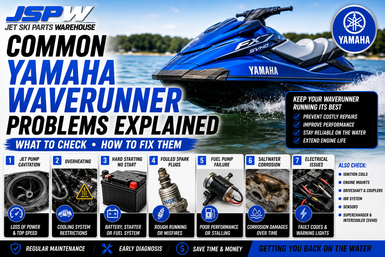
Common Yamaha WaveRunner Problems Explained: What To Check & How To Fix Them
Yamaha WaveRunners have built a strong reputation for reliability, but like any personal watercraft, they still require regular maintenance and eventually develop wear-related problems.
From older two-stroke models through the popular MR-1 and 1.8L HO engines to newer TR-1 and SVHO-powered WaveRunners, knowing the early warning signs can help you catch problems before they become expensive repairs.
If your Yamaha is difficult to start, losing performance, overheating or simply doesn't feel like it used to, here are some of the most common problems worth checking.
1. Jet Pump Cavitation
Cavitation is one of the most common performance complaints on any WaveRunner.
You'll usually notice the engine RPM rising quickly without the ski accelerating as strongly as it should.
Other symptoms include:
-
Poor hole-shot
-
Slipping sensation during acceleration
-
Reduced top speed
-
Engine revs increasing without matching forward thrust
What Causes It?
Common causes include:
-
Damaged impeller
-
Excessive impeller-to-housing clearance
-
Worn or damaged pump components
-
Debris inside the jet pump
-
Air entering the pump where it shouldn't
If the engine sounds healthy but the ski isn't transferring that power into the water, the jet pump should be one of the first areas you inspect.
2. Damaged Impeller
Yamaha impellers operate with very tight clearances and can be damaged surprisingly easily.
Common culprits include:
-
Rocks
-
Shells
-
Sand
-
Gravel
-
Rope
-
Fishing line
-
Other debris
Inspect the impeller for bent blades, chips, gouges or corrosion.
Even relatively minor damage can affect acceleration and top speed.
Avoid accelerating hard in shallow water, as the pump can suck material from the bottom even when the ski itself isn't touching it.
3. Jet Pump Bearing Problems
Bearings inside the jet pump are another important maintenance area.
Warning signs can include:
-
Grinding
-
Whining
-
Rumbling
-
Excessive vibration
-
Unusual noise from the rear of the ski
Ignoring bearing noise can potentially damage additional pump components.
If your WaveRunner suddenly develops an unusual mechanical noise from the pump area, investigate it before continuing to ride.
4. Overheating
An overheating warning should never be ignored.
Yamaha WaveRunners generally depend on water supplied through the jet pump for cooling, meaning restrictions can quickly create temperature problems.
Possible causes include:
-
Sand in cooling passages
-
Salt build-up
-
Blocked cooling lines
-
Damaged hoses
-
Loose hose clamps
-
Debris affecting water supply
-
Thermostat problems on applicable engines
If the overheat warning appears while riding, reduce throttle and stop the engine as soon as it's safe.
5. Saltwater Corrosion
Saltwater is one of the biggest enemies of any WaveRunner.
Over time, corrosion can affect:
-
Exhaust components
-
Cooling passages
-
Electrical connectors
-
Hose clamps
-
Fasteners
-
Jet pump components
-
Engine components
The easiest way to reduce corrosion is simple:
Flush and rinse the ski properly after saltwater use.
Don't just flush the engine. Rinse the jet pump, intake area, trailer and other salt-exposed components as well.
6. Battery Problems
A weak battery can create far more problems than simply preventing the engine from starting.
Symptoms include:
-
Slow cranking
-
Clicking
-
Display resetting
-
Intermittent starting
-
Electrical warnings
-
No response from the starter
A battery can show reasonable voltage at rest but still fail when placed under starter load.
If starting performance has deteriorated, load-testing the battery can provide a much better indication of its condition.
7. Starter Motor Problems
If the battery is healthy but the engine still doesn't crank correctly, the starter motor may be failing.
Common symptoms include:
-
Slow cranking
-
Intermittent operation
-
Starter doesn't turn
-
Unusual starter noise
Before replacing the starter, also inspect:
-
Battery cables
-
Earth connections
-
Starter solenoid
-
Electrical connections
Corrosion or voltage drop can easily mimic a faulty starter motor.
8. Starter Solenoid Failure
The starter solenoid controls the high-current connection between the battery and starter motor.
A failing solenoid may produce:
-
Single click
-
Repeated clicking
-
Intermittent cranking
-
No starter operation
If the battery is healthy and the starter motor works when supplied correctly, the solenoid becomes a likely suspect.
9. Fuel Pump Problems
A weak fuel pump can cause problems that are easily mistaken for ignition or engine faults.
Symptoms may include:
-
Hard starting
-
Engine cranks but won't start
-
Hesitation
-
Loss of power
-
Engine surging
-
Stalling
-
Poor performance at high RPM
Listen for the fuel pump priming when the ignition system is activated.
If you suspect a fuel delivery problem, check fuel pressure against the specification for your particular model.
10. Dirty Or Failing Fuel Injectors
Fuel injectors can become restricted by contaminated or stale fuel.
Possible symptoms include:
-
Rough idle
-
Misfire
-
Hard starting
-
Uneven cylinder performance
-
Hesitation
-
Reduced power
If one cylinder behaves differently from the others, checking injector operation may be worthwhile.
11. Fouled Spark Plugs
Spark plugs are one of the easiest things to check when a Yamaha isn't running correctly.
Worn or fouled plugs can cause:
-
Difficult starting
-
Rough idle
-
Misfires
-
Poor acceleration
-
Reduced top speed
-
Increased fuel consumption
Remove the plugs and compare them.
If one looks dramatically different from the others, don't simply replace it and forget about it—the plug may be revealing another engine problem.
12. Ignition Coil Problems
Modern Yamaha WaveRunners commonly use individual ignition coils.
A failing coil can cause:
-
Misfire
-
Rough running
-
Difficult starting
-
Loss of power
-
One cylinder not firing
Coil problems can sometimes become more noticeable as the engine heats up.
Always inspect the electrical connector and wiring before condemning the coil itself.
13. Engine Mount Wear
Engine mounts isolate vibration and keep the engine correctly positioned.
Damaged mounts may cause:
-
Excessive vibration
-
Unusual movement
-
Alignment problems
-
Abnormal driveline noise
Engine alignment is particularly important because the engine, driveshaft and jet pump must work together correctly.
14. Driveshaft And Coupler Problems
The driveshaft transfers power from the engine to the jet pump.
Potential problems include:
-
Worn splines
-
Corrosion
-
Damaged couplers
-
Bearing problems
-
Seal problems
Symptoms can include vibration, unusual noises and poor propulsion.
If you've removed the jet pump for servicing, it's a good opportunity to inspect accessible driveshaft components.
15. Water Entering The Hull
Finding some moisture isn't necessarily unusual, but significant amounts of water need investigation.
Possible sources include:
-
Damaged hoses
-
Loose clamps
-
Hull fittings
-
Driveshaft sealing components
-
Cooling-system leaks
-
Exhaust-system leaks
Never simply keep draining the hull without finding out where the water is coming from.
16. Supercharger Problems On SVHO Models
Yamaha's supercharged SVHO engines deliver serious performance, but the additional components mean there are more systems to maintain.
Potential problems can involve:
-
Supercharger components
-
Intercooler
-
Intake hoses
-
Clamps
-
Boost leaks
Symptoms may include:
-
Reduced acceleration
-
Loss of top speed
-
Poor boost performance
-
Unusual supercharger noise
If an SVHO suddenly loses performance while the engine otherwise runs smoothly, inspect the complete intake and boost system.
17. Intercooler Problems
On supercharged models, the intercooler helps reduce intake-air temperature.
Salt, corrosion or internal problems can eventually affect its performance.
Possible symptoms include:
-
Reduced power
-
Poor high-RPM performance
-
Boost-related issues
-
Water where it shouldn't be
Regular flushing and inspection are especially important for SVHO models operated in saltwater.
Yamaha MR-1 Engine Problems
The Yamaha MR-1 engine was used across numerous popular WaveRunners and has earned a strong reputation when properly maintained.
As these skis age, however, it's increasingly important to watch for:
-
Corrosion
-
Cooling-system restrictions
-
Oil leaks
-
Ignition issues
-
Fuel-system problems
-
Compression differences between cylinders
Age and maintenance history often matter more than the basic engine design itself.
Yamaha 1.8L HO & SVHO Problems
Yamaha's 1.8-litre platform has been used across many FX, VX, FZR and FZS models.
Areas worth monitoring include:
-
Jet pump condition
-
Cooling system
-
Fuel delivery
-
Ignition system
-
Engine mounts
-
Corrosion
-
Supercharger and intercooler systems on SVHO models
Regular servicing goes a long way towards keeping these engines reliable.
Yamaha TR-1 Problems
The compact TR-1 three-cylinder engine is found in numerous modern Yamaha WaveRunners.
Common troubleshooting areas include:
-
Battery condition
-
Spark plugs
-
Fuel system
-
Sensors
-
Cooling system
-
Electrical connections
As with any modern EFI engine, correct diagnosis is important before replacing parts.
Preventing Yamaha WaveRunner Problems
Many expensive repairs can be avoided with basic preventative maintenance.
Make a habit of:
-
Flushing after saltwater riding
-
Checking engine oil
-
Maintaining the battery
-
Replacing service items on schedule
-
Inspecting the jet pump
-
Avoiding hard acceleration in shallow water
-
Keeping electrical connections protected
-
Investigating unusual noises immediately
-
Addressing warning messages rather than ignoring them
A small problem found early is almost always cheaper to repair.
Start With The Symptoms
When diagnosing your Yamaha, avoid replacing parts based purely on guesses.
For example:
Engine Cranks But Won't Start
Check:
-
Battery
-
Spark
-
Fuel delivery
-
Spark plugs
-
Fuel pressure
-
Sensors
Engine Revs But Ski Doesn't Accelerate
Check:
-
Impeller
-
Pump clearance
-
Jet pump
-
Intake for debris
Engine Runs But Has Lost Power
Check:
-
Spark plugs
-
Fuel delivery
-
Compression
-
Jet pump
-
Intake system
-
Supercharger/intercooler on applicable models
A logical diagnostic process can save a considerable amount of money.
Need Yamaha WaveRunner Parts?
Jet Ski Parts Warehouse stocks a huge range of Yamaha WaveRunner parts, including:
-
Jet pumps
-
Impellers
-
Pump housings
-
Bearings and seals
-
Starter motors
-
Starter solenoids
-
Fuel pumps
-
Fuel injectors
-
Ignition coils
-
Spark plugs
-
Engine mounts
-
Driveshaft components
-
Intercoolers
-
Engine rebuild components
-
Genuine Yamaha OEM parts
-
Premium aftermarket parts
-
Quality used OEM components
If you're unsure which part fits your WaveRunner, contact JSPW with your model, year and OEM part number where available, and we'll help identify the correct replacement.
Final Thoughts
Yamaha WaveRunners are generally extremely reliable when maintained correctly, but no jet ski is immune to wear, corrosion and occasional component failure.
The key is recognising changes early.
If your Yamaha becomes harder to start, starts cavitating, loses speed, overheats or develops an unusual noise, don't continue riding until the problem becomes obvious.
Inspect it early, diagnose the cause correctly and replace worn components before they damage something else.
That's the best way to keep your WaveRunner reliable—and keep yourself on the water.